
প্রকাশকাল: ০৫ সেপ্টেম্বর ২০২৬
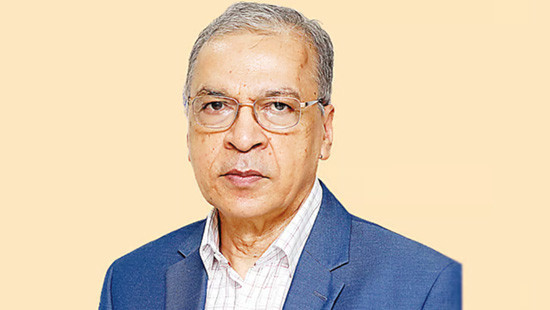
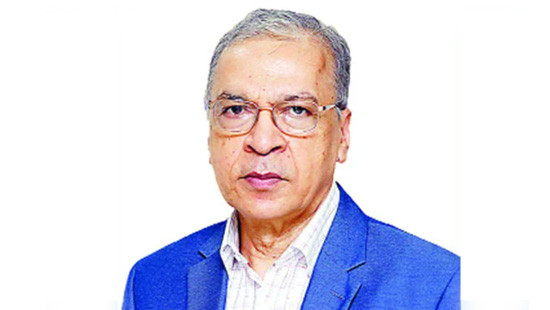
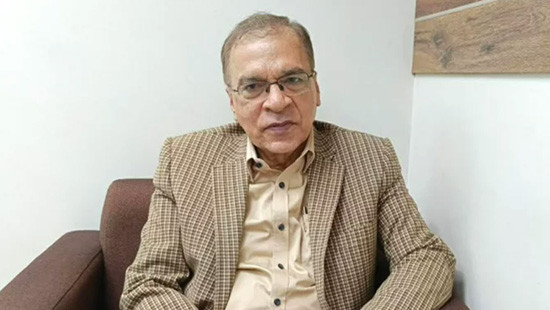
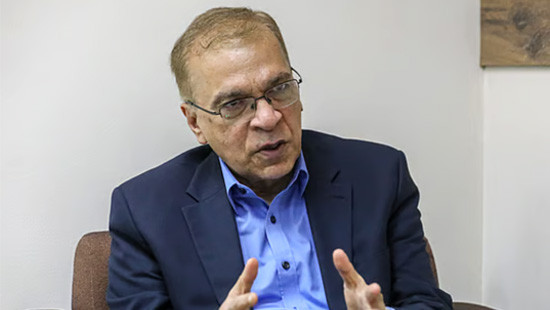
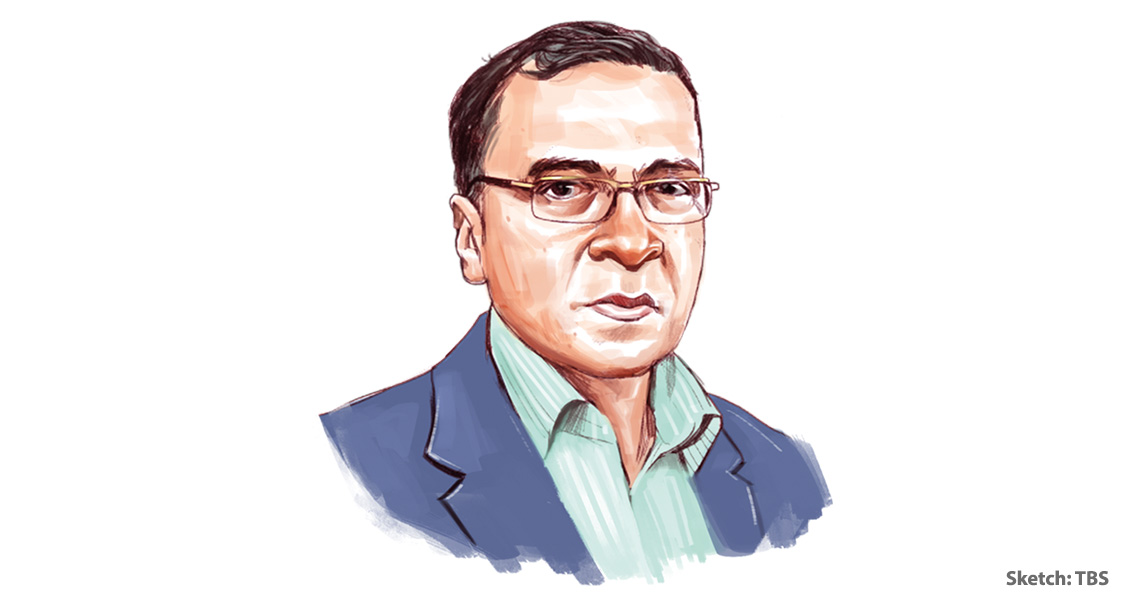
This excerpt is from ‘Zero Sum Game’, a talk show hosted by Shakhawat Liton, Executive Editor of The Business Standard. The guest for this episode was Iftekharuzzaman, executive director of Transparency International Bangladesh (TIB). Reviewing the government’s first six months since February’s election, he welcomed the new pay scale but insisted it be tied to public asset declarations, warning that otherwise it will only raise the premium on corruption. He argued that corruption costs Bangladesh 2-3% of national income and some $16 billion a year in laundered funds, and that parliament’s oversight role, the watchdog bodies and the pattern of new law-making are all pointing the wrong way.
Six months into the new government, how do you read the moment?
I am, by temperament, a genetic optimist, so I still believe the possibility opened by the 2024 uprising is alive. But the scale of risk keeps growing heavier, almost like a snowball, and that is the worry. What the movement demanded, above all, was state reform and a government accountable to the people.
That was not a new demand – it was there in 1971, and again in 1990 – but we have failed repeatedly, and this time the expectation ran higher because the bitterness of the past 16 years touched everyone, including many of those who now sit in parliament and in government. They too were victims of that misrule, so the hope was that they, of all people, would deliver the reform.
TIB has said the new pay scale should be implemented only on condition that officials publish their wealth statements. Why attach a condition to a fair pay rise?
Let me be clear: the pay rise itself is justified, and we see it positively. It had not been reviewed for 11 years, and pay must keep pace with the cost of living, or you cannot expect honest, accountable, professional service from people under financial strain – and it is the honest officers who suffer most. So we welcome it as their fair due.
But it should apply only to those who publish an annually renewable statement of their assets. Where public money pays the salary, the public has the right to know the official's wealth; it is a simple, globally established practice that prevents corruption and builds accountability. Those who refuse to publish have something to hide – and for that class, the ones amassing wealth illegally, the increment is peanuts. They do not need it.
So a pay rise on its own will not reduce corruption?
It will not – and without the accountability that must accompany it, what is called the negative incentive, it will do the opposite: it will raise the premium on corruption and deepen it. The public then carries a triple burden: the immediate cost of living, the extra pay drawn from their own taxes, and a wider, deeper corruption on top. We have the proof already.
The 2015 pay scale came with the same promise. The then prime minister herself spoke of a peon worth 400 crore taka; her own finance minister said more than once that pay had been raised but corruption had not fallen. That is their admission, not just ours. The present government can make the pay conditional – the question is whether it has the will to carry it out against the resistance.
How large is the cost of corruption to the economy?
Very large. Bring corruption down even to a middling level and national income could be two to three per cent higher. Roughly $16 billion is laundered out of the country every year – more, if you can picture it, than double what Bangladesh receives in foreign direct investment and development assistance combined. That is a colossal lost opportunity, and its heaviest weight falls on the lowest-income people. Corruption is like woodworm; it quietly eats away the muscles of the state until, in the end, the state fails.
Our tax-to-GDP ratio is among the lowest in the world. Where does that come from?
In large part, from evasion and from what enables it. Our ratio is said to be lower even than Afghanistan's. From our research, I can say plainly that the revenue board is a heaven for those who want to evade tax and a hell for those who want to pay honestly. The person who declines to grease the official and simply pays what is due gets harassed; the one who evades through a quiet transaction has an easy time of it.
Take the 'goat scandal' officer – review his client list and you would see not only the wealth he amassed but the tax his clients evaded, and the revenue the country was cheated of. Set that against a target of six lakh crore taka this year, and the question asks itself.
Let us talk about the institutions. What do you think of the parliament?
Parliament is the most important democratic institution, though not the only one, and we had no working parliament for 17 years, so a new elected one is itself welcome. Broadly, the start has been reasonably lively. But a parliament has three roles – welfare lawmaking, public-interest debate, and, most important, holding the executive to account through its committees – and it is the third that already gives real cause for concern.
The opposition is not taking part in key committees, including the constitution-reform committee, and two risky draft laws, on the Human Rights Commission and on enforced disappearance, have gone through cabinet with serious flaws. On the accountability function, I cannot yet say we are on the right path.
You have studied the ordinances that were turned into law. What pattern do you see?
A very clear one. The ordinances that enriched the powers of the executive were swept into law, while those that could have brought the executive under control and accountability were repealed. Parliament decided – but the real question is whether Parliament controlled the process or was made to decide it, and my reading is the latter.
You see it in the Human Rights Commission law, which would bar the commission from investigating the very forces most accused of enforced disappearance and extrajudicial killing, place it fully under government control, and even remove the power to inspect detention centres such as the 'Aynaghar'. On what logic is that being done?
And the watchdog institutions themselves?
The signals have not been good. The Anti-Corruption Commission was left unstaffed for almost the whole period and only recently reconstituted; the Information Commission has still not been formed. In banking, the interim government had begun to pull a sector back from the edge, and then, suddenly, the central bank governor learned he was being removed as he arrived at his office – an extremely bad precedent – while a man whose only real record in the banking sector was defaulting on loans was placed on an oversight body. Ask yourself what signal that sends.
You keep returning to the political parties. Why?
Because a political party is itself an institution, and it is failing in its most basic duty. We have long urged the parties to stand before the mirror, and the time to do so is slipping away. Political position and leadership are being treated as a licence for the abuse of power.
During the interim period there were some 133 ordinances and about a dozen reform commissions, yet not one word about reforming the parties themselves. When we raise it we are accused of trying to de-politicise the country, but it is the opposite: we want party reform precisely so that politics survives.
As How Democracies Die argues, the first gatekeeper against autocracy is the political party – and where the party cannot check itself, autocracy is what follows. A party is accountable, first and last, to the people, because it is the people who gave it the mandate.
What of the prime minister himself?
He has, personally, set examples and sent signals we have not seen in Bangladesh's recent past, and those are good signs. But a state is not run by one person, and it is not being reflected in governance, at the field level or higher – the whole cabinet floats together or sinks together, everything turning on him. The good signals are being resisted from two directions.
One is political, from within his own party, where position is treated as a licence: when a minister publicly played down extortion and corruption, the shock was widespread, yet no correction came from the top, and ten days later the same minister said the same thing.
The other is the system itself, in places such as public procurement, where the promised digital, competitive process has not delivered, and a small circle of contractors still captures the lion's share through the old collusion of politics, bureaucracy and contractors.
You have met the prime minister. What did you tell him, and where is the hope?
He agreed fully with our analysis of the adversities he faces; he did not deny them, and said he could not disagree, that he is trying, though he could not promise how soon. My advice came down to two things.
First, and above all, look to his own party and reform it – much of the violence in the field now is intra-party, a symptom of the deficit of internal democracy, of 'it is our turn, winner takes all'; unless he reins in the party, it will soon pass beyond his control, and even the good he is doing, the family and farmer cards, risks becoming a boomerang.
Second, he must take a firm grip on the system – the law reforms and the procurement machinery – much of which may never reach his desk as it truly is. There is a real possibility here still; we have even proposed that Bangladesh host the International Anti-Corruption Conference in 2028, and he thought it a good idea. But using the possibility will take honest courage at the top
The Business Standard
04 September 2026
Link