Published: 03 May 2026
Bangladesh marked World Press Freedom Day 2026 against a particularly somber backdrop. For decades, journalism in this country has been squeezed from multiple directions — first by successive governments that weaponized law and withdrew advertising to discipline critical outlets, then by media owners who subordinated editorial independence to business and political interests, and now by a digital information environment in which misinformation spreads faster than verified reporting. The result is a media landscape that is nominally free but structurally constrained — one in which the space for journalism that genuinely serves the public has steadily narrowed and public confidence in the press has eroded in step.
Journalism shapes peace. When information is manipulated, it fuels division and erodes trust. When it is free and truthful, it strengthens accountability, fosters dialogue, and upholds human rights. The deeper crisis Bangladesh faces is therefore one of trust — and trust, once lost, is far harder to rebuild than a ranking.
How Media Economics Shapes Editorial Choices
It is tempting to read Bangladesh's press freedom situation as a product of political turbulence — an aberration of the transition period, a residue of the authoritarian era. That reading is dangerously incomplete.
Most of the leading privately owned media in Bangladesh are owned by a handful of major businessmen who emerged during the country's economic boom. They treat their media outlets as instruments of influence and profitability, prioritizing good relations with whoever holds power over safeguarding editorial independence. Many newspapers remain dependent on state funding through government advertising. This is not a recent development. It is a structural feature of how the Bangladeshi media economy was built — and it means that even in the absence of overt state repression, the conditions for genuinely independent journalism remain precarious.
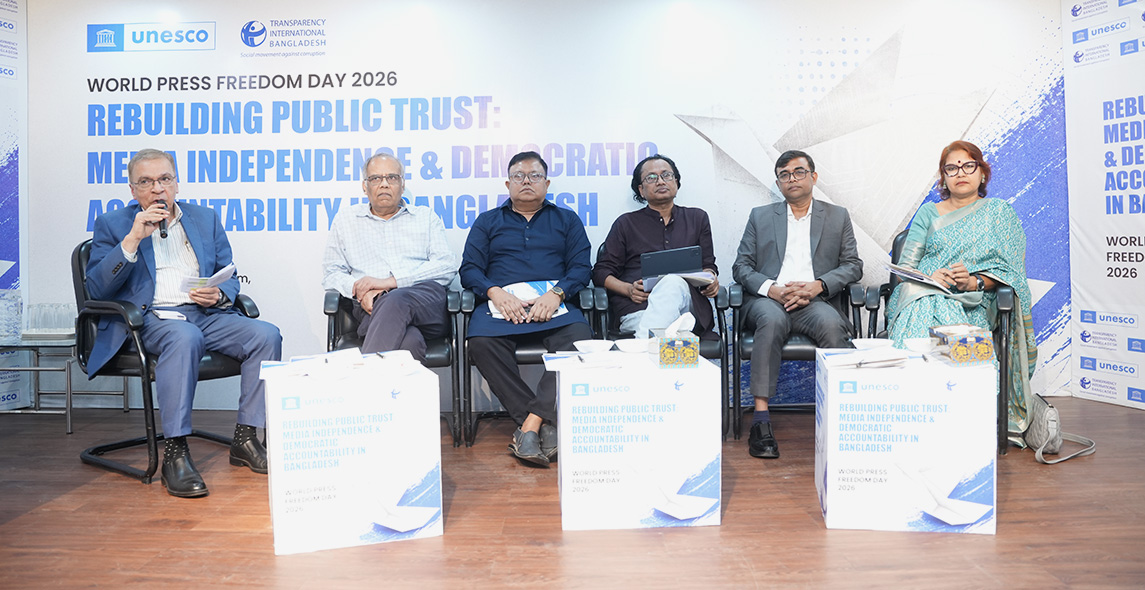
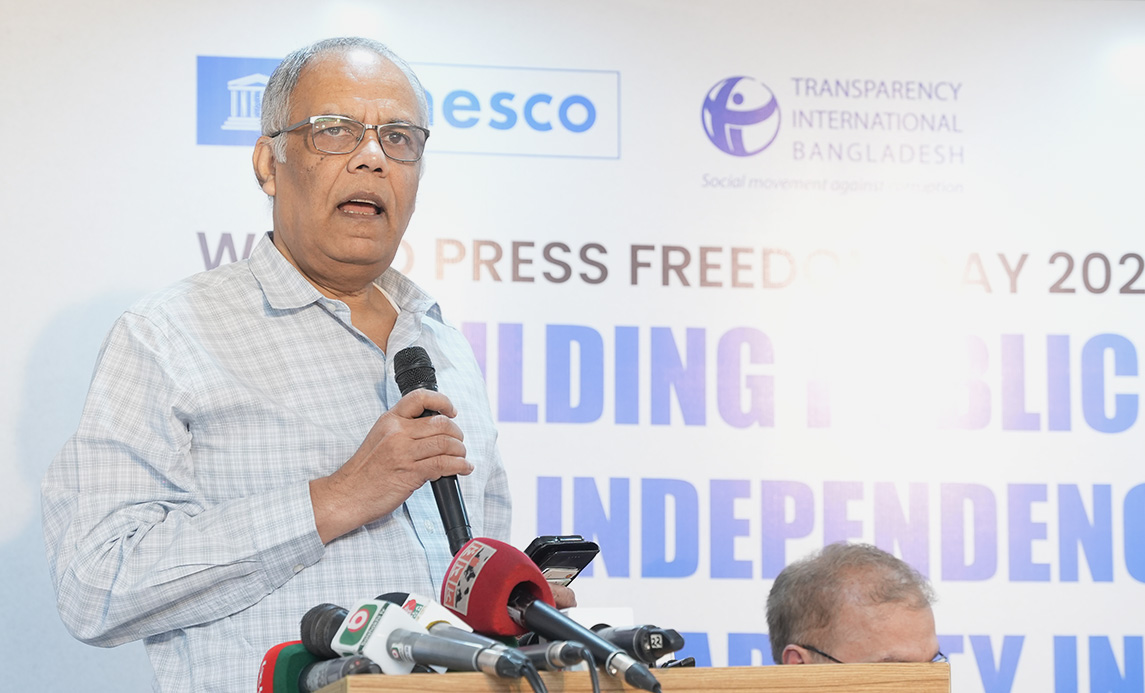
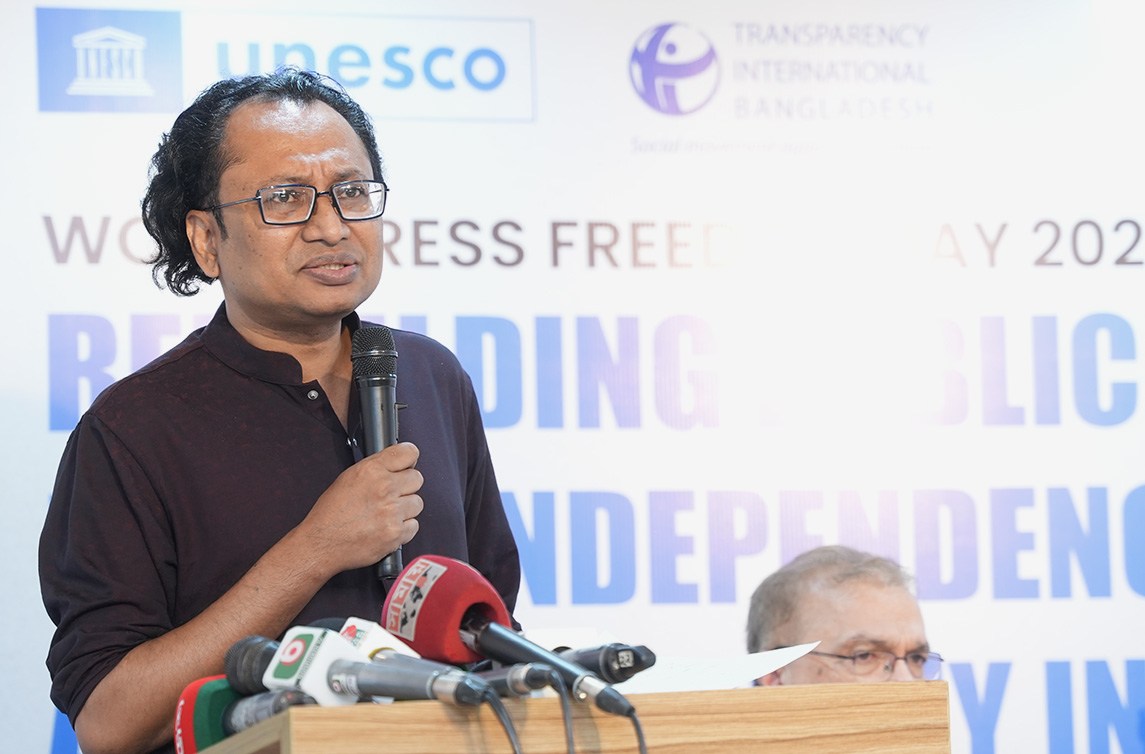
Kamal Ahmed, Consulting Editor of The Daily Star and a panelist at the TIB-UNESCO World Press Freedom Day dialogue, was candid: while no government pressure is felt at present, owner interference is visible — some outlets omit their proprietors' names from lists of loan defaulters published in parliament. This is not censorship by the state. It is something more corrosive — censorship embedded in the ownership structure itself, invisible to most readers, and far harder to contest.
Media ownership concentrated in the hands of a small number of business interests with direct stakes in political outcomes poses a governance problem, not merely a market one. Transparency around ownership, clear separation between business interests and editorial functions, and enforceable editorial independence protections are not ideals — they are regulatory requirements that must be legislated and enforced.
Legal Framework Continues to Restrain Journalism
Beyond ownership pressures, the legal environment continues to cast a long shadow. The Cyber Security Act, modeled on the controversial Digital Security Act before it, allows for warrantless searches, arrests, and device seizures and undermines the confidentiality of journalistic sources — creating conditions in which self-censorship becomes a rational survival strategy rather than a personal failing.
More than 130 journalists have faced legal proceedings since the 2024 political transition, including charges as grave as murder and crimes against humanity, with at least five detained. These are not abstractions. They represent individual journalists whose professional choices, sources, and investigations are now circumscribed by the knowledge that a critical article or a roundtable appearance can become the basis of criminal prosecution. That such charges continue under a new government makes their persistence not merely a legal failure but a political choice.
TIB’s position is clear—a government that inherits unjust laws and keeps them endorses them, rather than merely inheriting them. The ICT Act, the Digital Security Act, and the Cyber Security Act must be repealed and replaced with legislation meeting international standards on freedom of expression. The culture of impunity for violence against journalists — a signal to every would-be attacker that harm carries no consequence — must also end. We must treat journalist safety, especially for women journalists who face a deeply rooted culture of harassment and targeted online abuse, as a non-negotiable threshold.
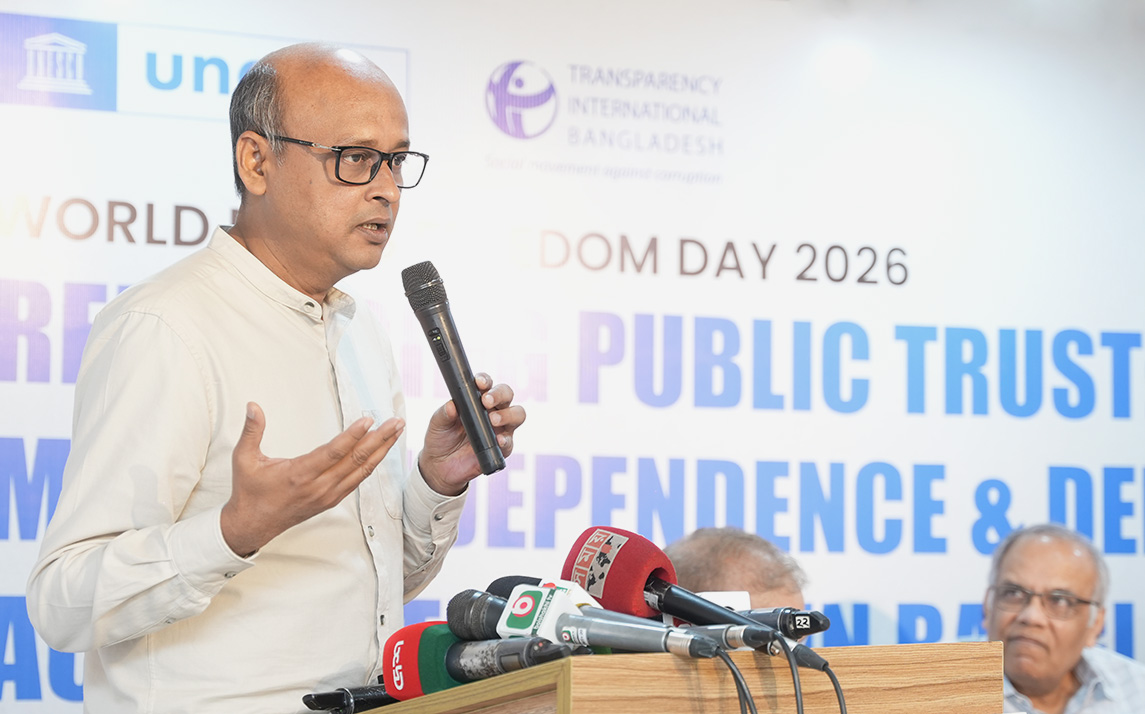
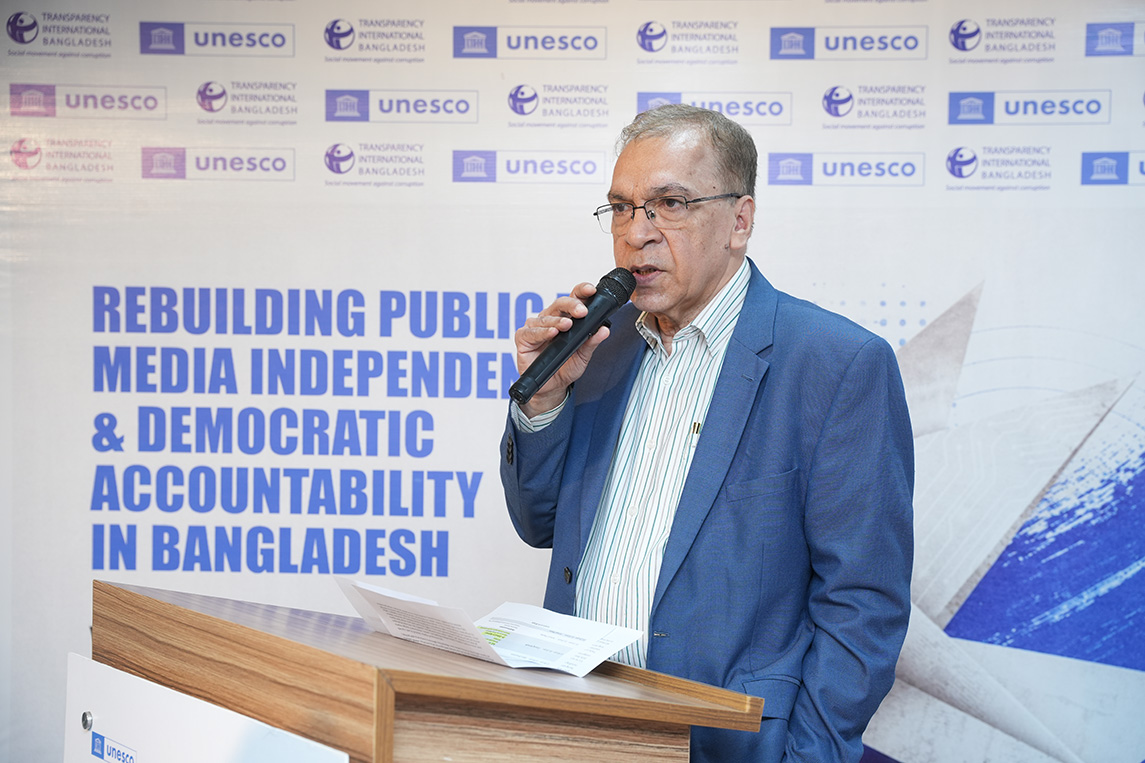
The Cost of Losing Public Trust in Media
When media loses credibility, it is not journalists who pay the heaviest price — it is ordinary citizens. Bangladesh's media credibility has sunk to its lowest point, driven by years of authoritarian control on one side and the economic interests of media owners on the other. A public that cannot trust what it reads or watches is a public unable to make informed decisions — about who governs them, how public money is spent, or whether the institutions meant to serve them are doing so honestly.
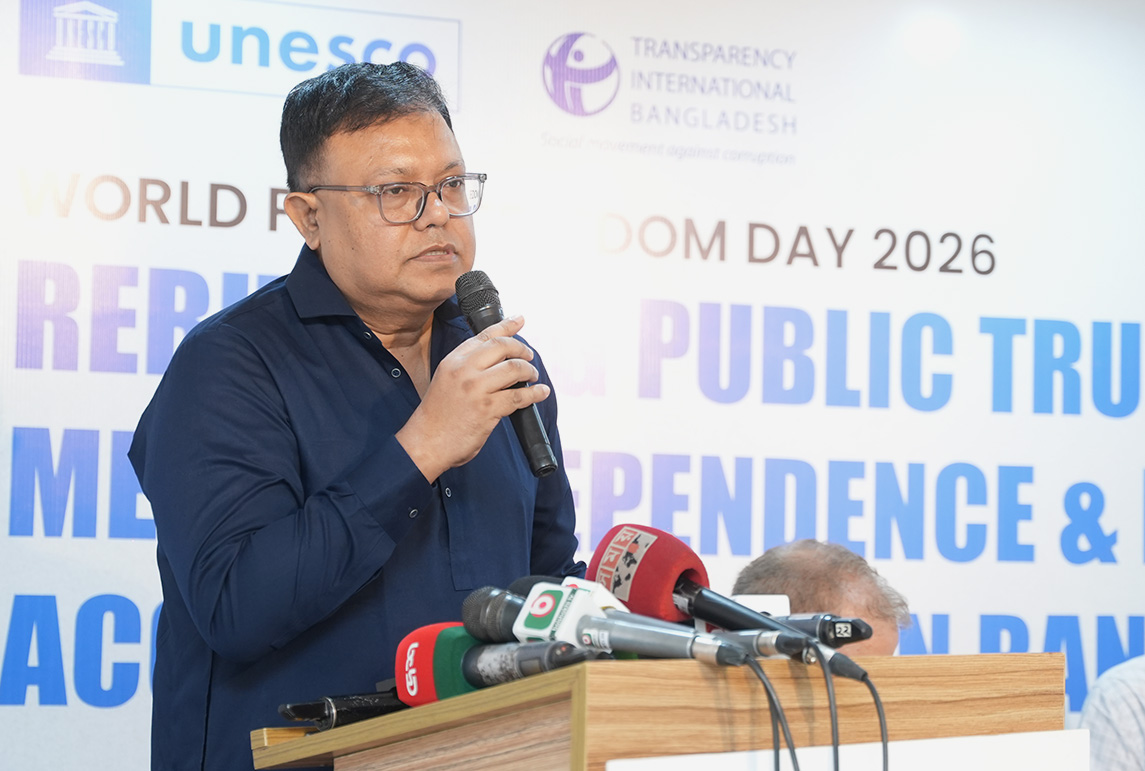
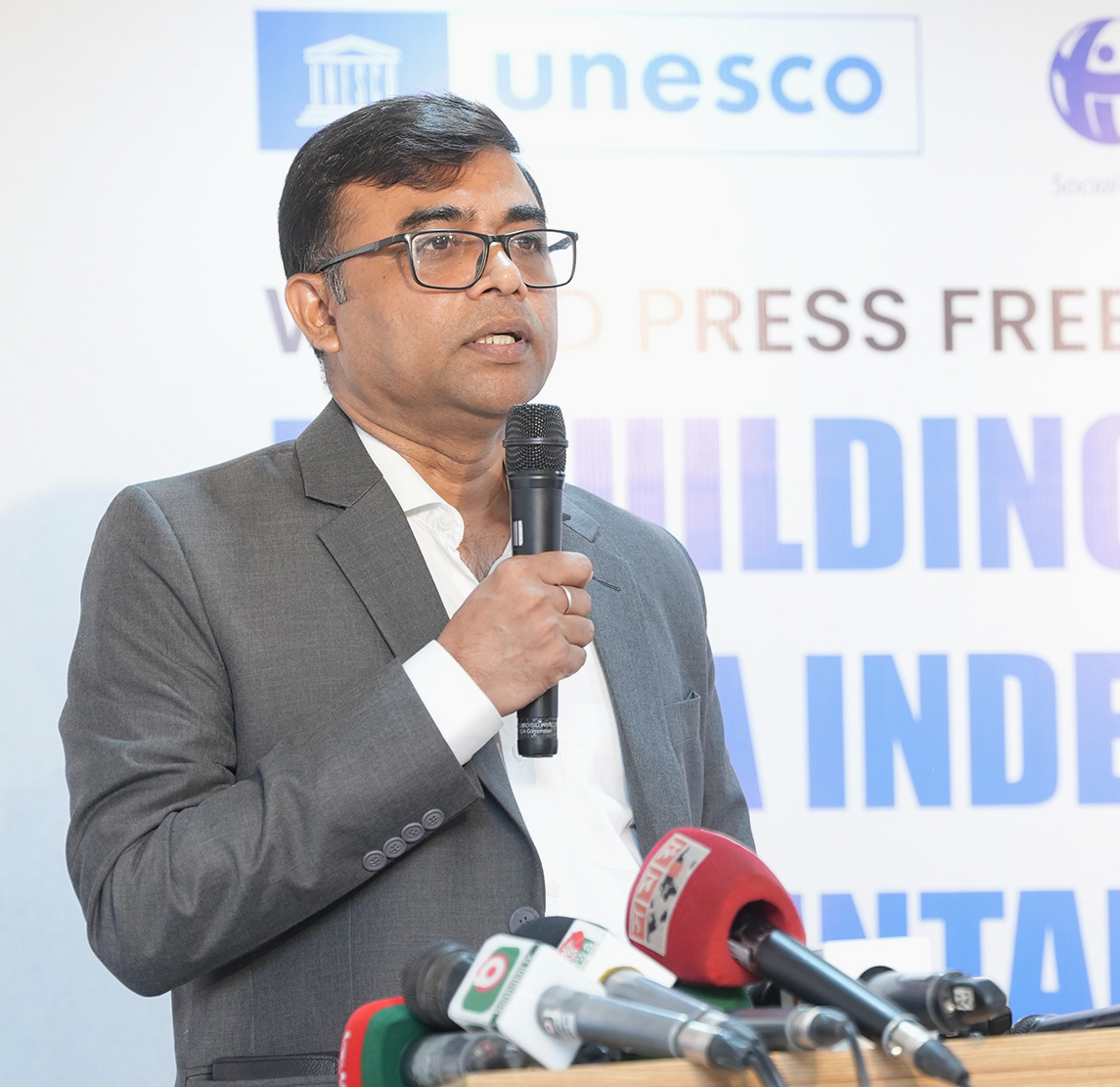
This is where media freedom connects directly to TIB's core concern. As TIB Executive Director Dr. Iftekharuzzaman stated, public trust in media is fundamental to democratic governance, and strengthening media independence is an essential condition for citizens to hold institutions accountable. Corruption is not solely confined to the hidden corners of bureaucracy. It also hides in plain sight — in stories that were never investigated, in names that were quietly dropped from published lists, and in editorial decisions shaped by ownership interests rather than public interest. When media cannot report freely, citizens lack the information needed to act.
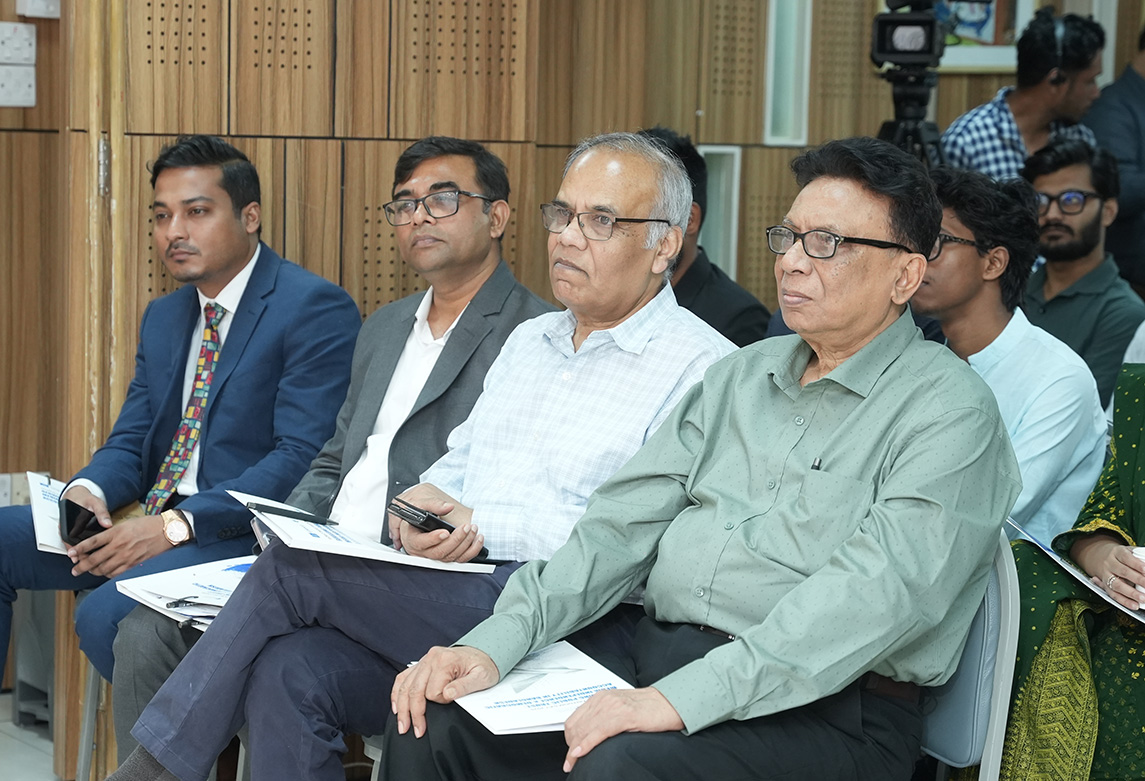
The problem is further compounded in the digital space. The World Press Freedom Day dialogue convened by TIB and UNESCO placed information integrity at the center of its discussions because misinformation and disinformation do not simply mislead — they exhaust. A public bombarded with contradictory, unreliable, or manipulated information eventually stops trying to distinguish truth from falsehood, and that disengagement is precisely what allows unaccountable power to operate undisturbed. Meanwhile, state broadcasters Bangladesh Television and Bangladesh Betar continue to function as government propaganda outlets with no editorial independence, further narrowing the space for credible public information. The citizen, in the end, is left to navigate alone—without the reliable journalism that democracy depends upon.
Closing the Gap Between Policy and Practice
The dialogue reaffirmed a shared commitment — across government, civil society, the media profession, and Bangladesh's development partners — to press freedom, journalist safety, and information integrity. That convergence of voices is itself significant, and the positions expressed were clear.
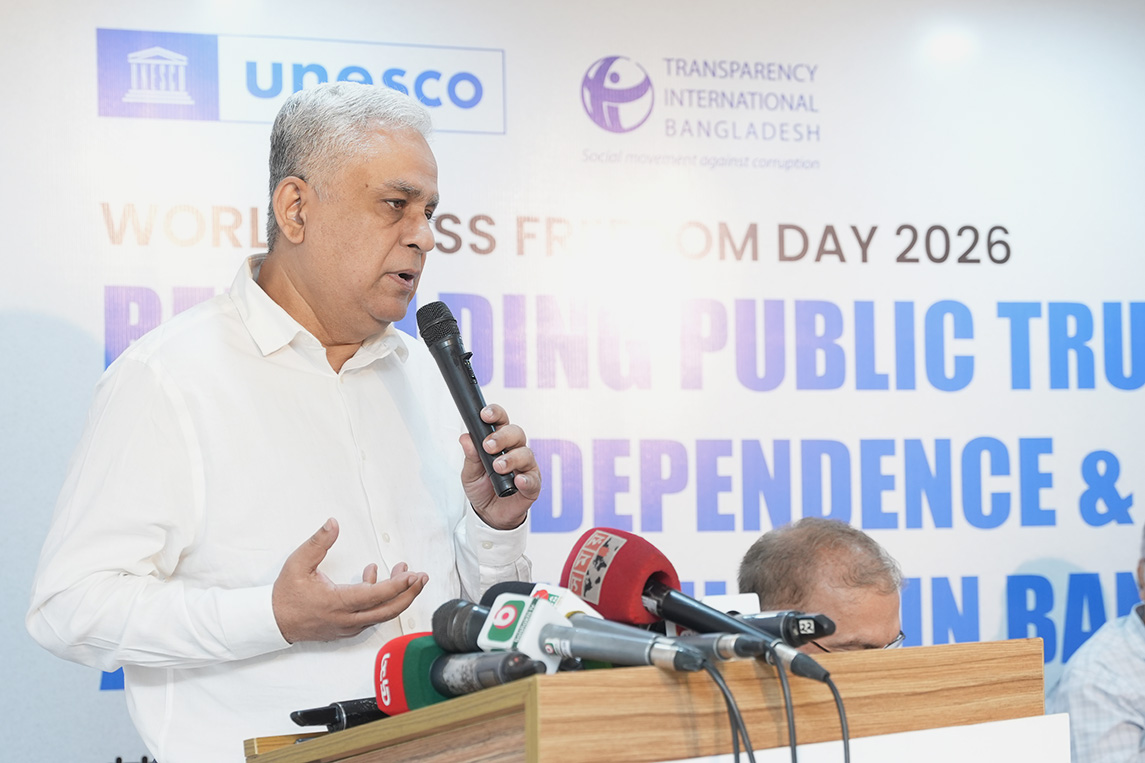
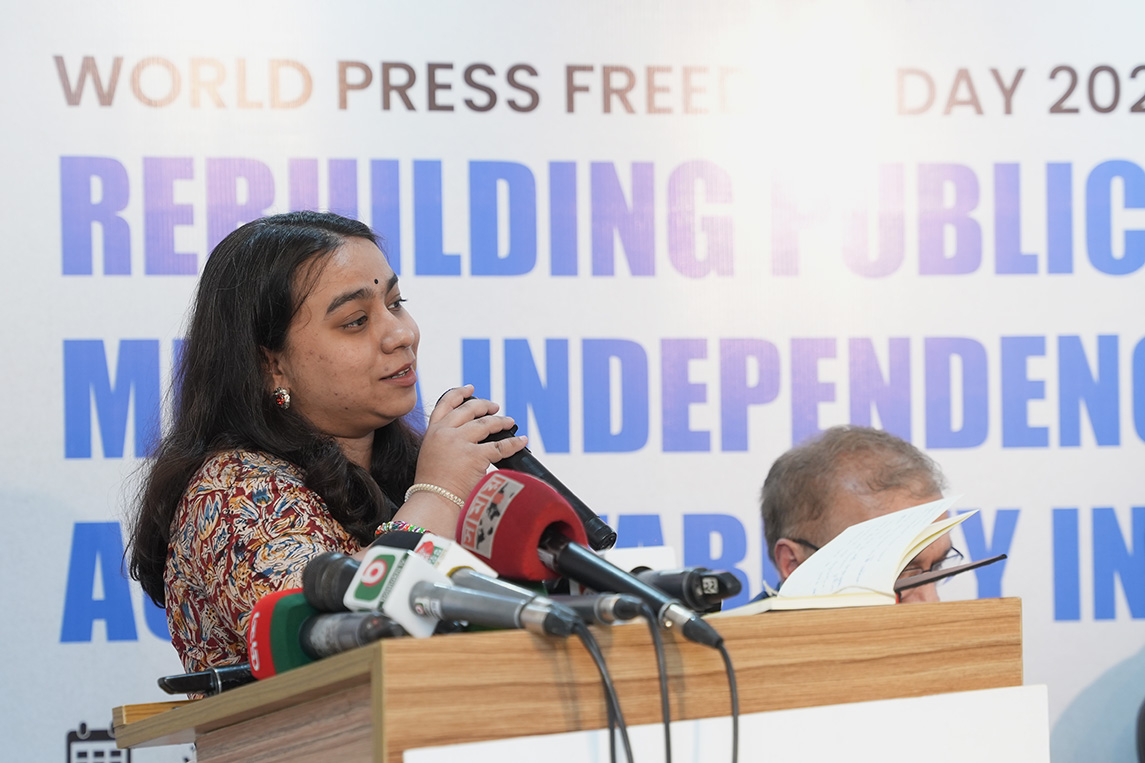
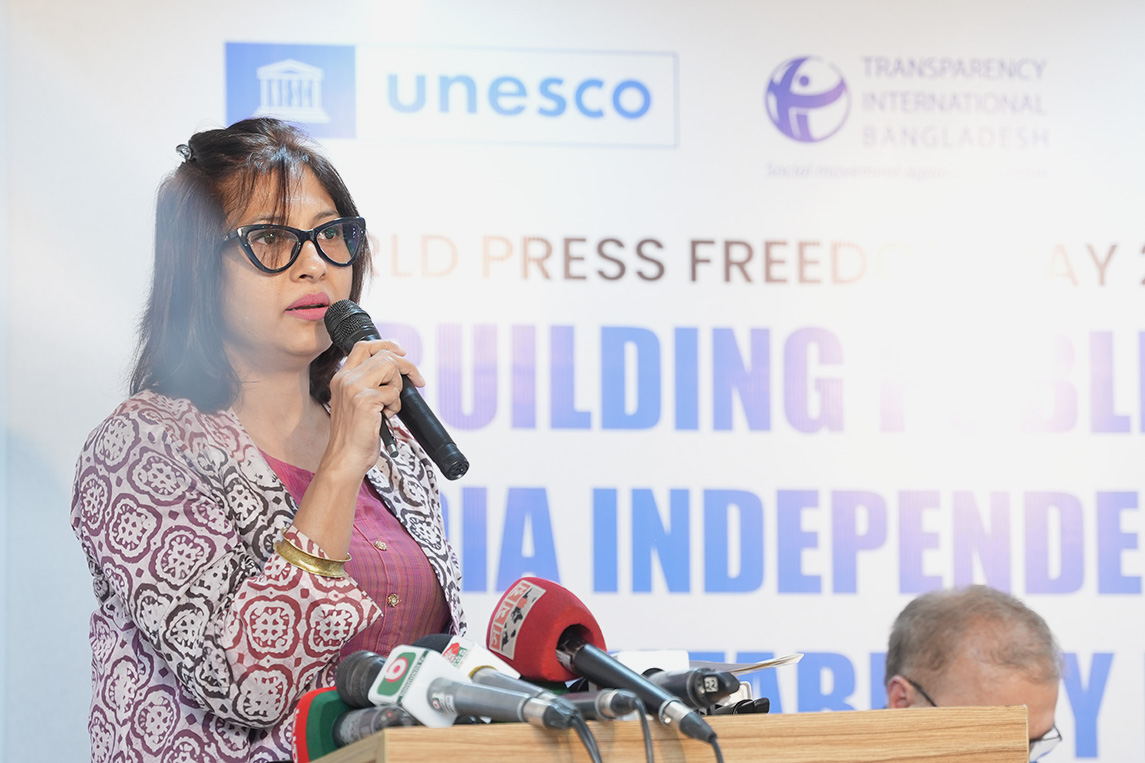
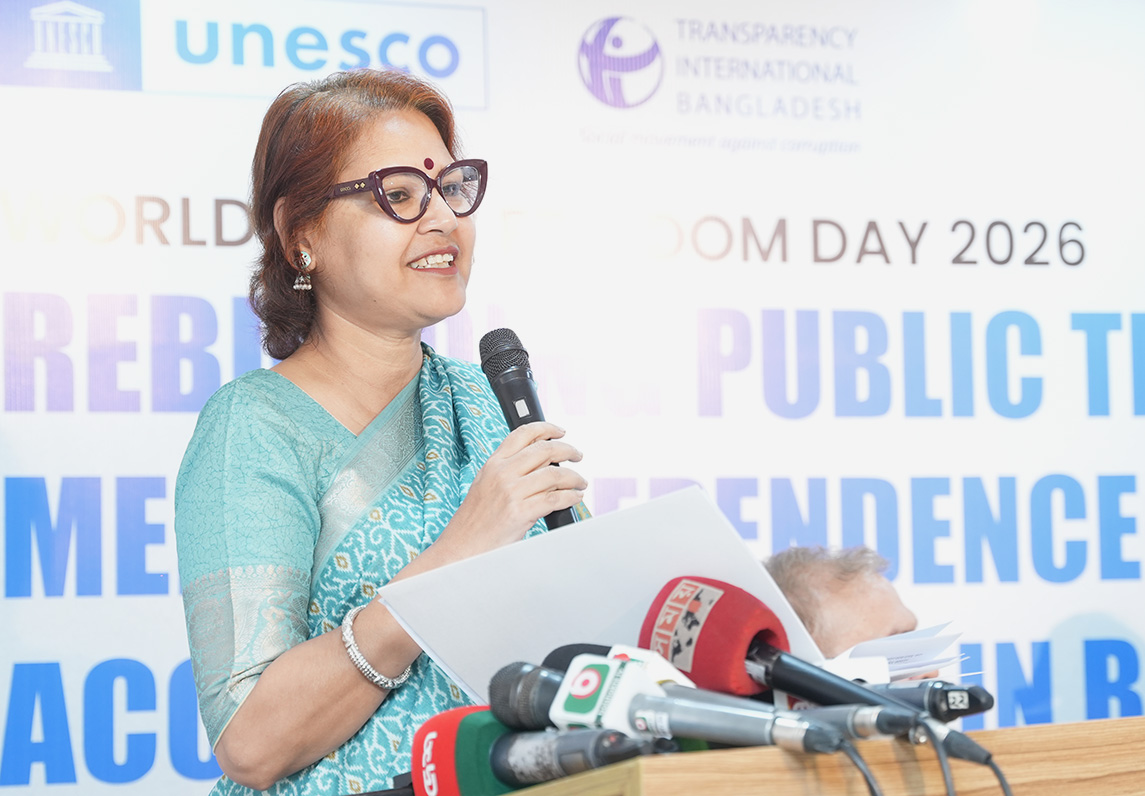
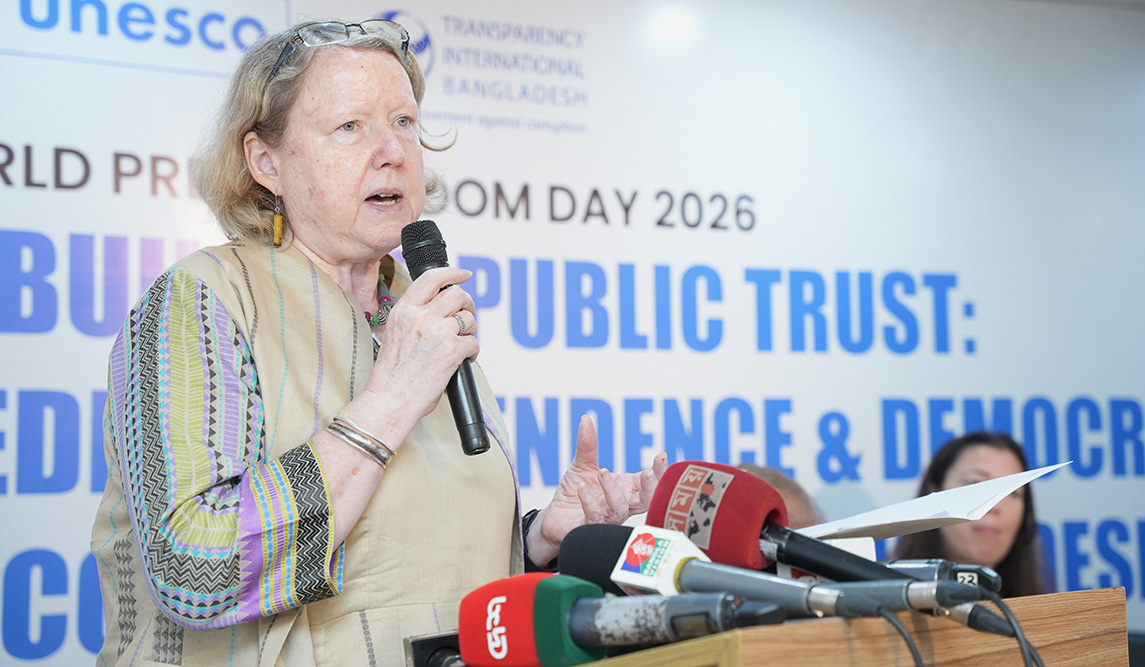
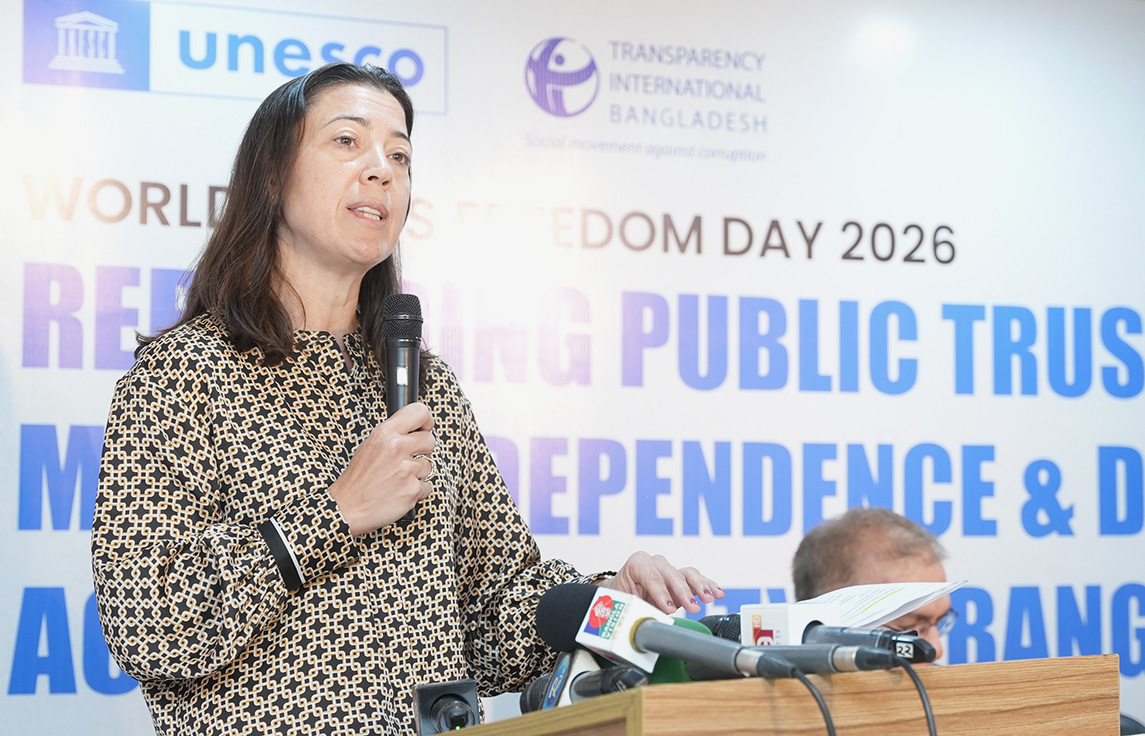
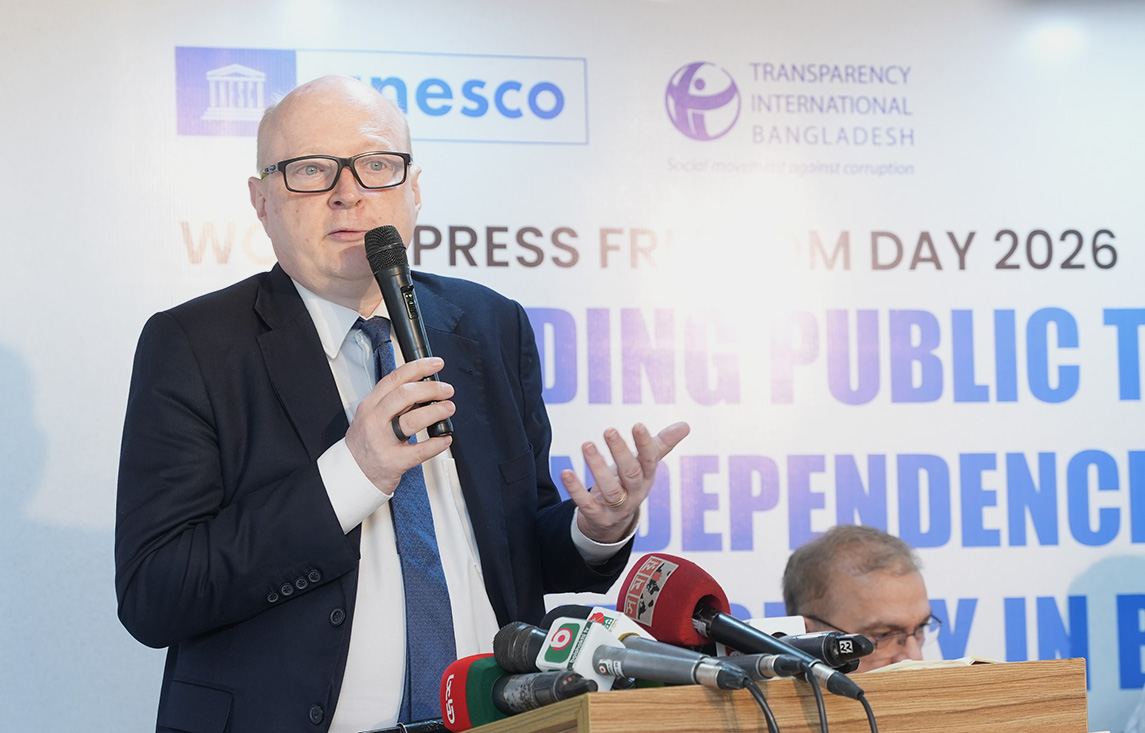
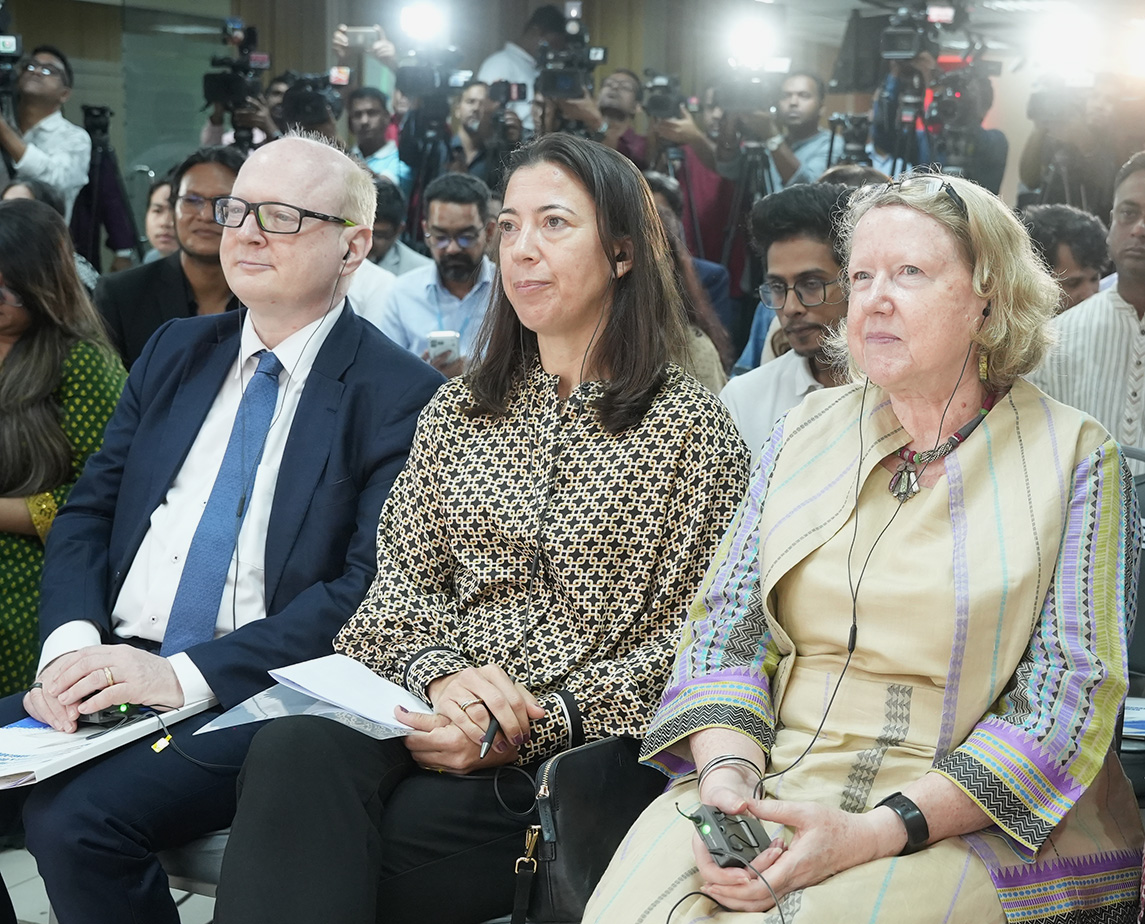
UNESCO Representative Dr. Susan Vize noted that independent, pluralistic, and professional media are central to informed public discourse and that strengthening journalist safety and information integrity is critical to rebuilding trust in today's complex information environment. German Ambassador Dr. Rüdiger Lotz and Swedish Embassy First Secretary Paola Castro Neiderstam similarly underscored that a free and enabling media environment is a cornerstone of democratic governance and human rights—reflecting the firm expectation of Bangladesh's development partners that what is needed now is structural reform, not rhetorical commitment.
Dr. Zahed Ur Rahman, Adviser to the prime minister on the Ministry of Information and Broadcasting, acknowledged that a credible and independent media ecosystem is essential for accountable governance and that ensuring journalist safety requires sustained collaboration across sectors. These are the right words. The question that defines this moment is whether they will be matched by action.
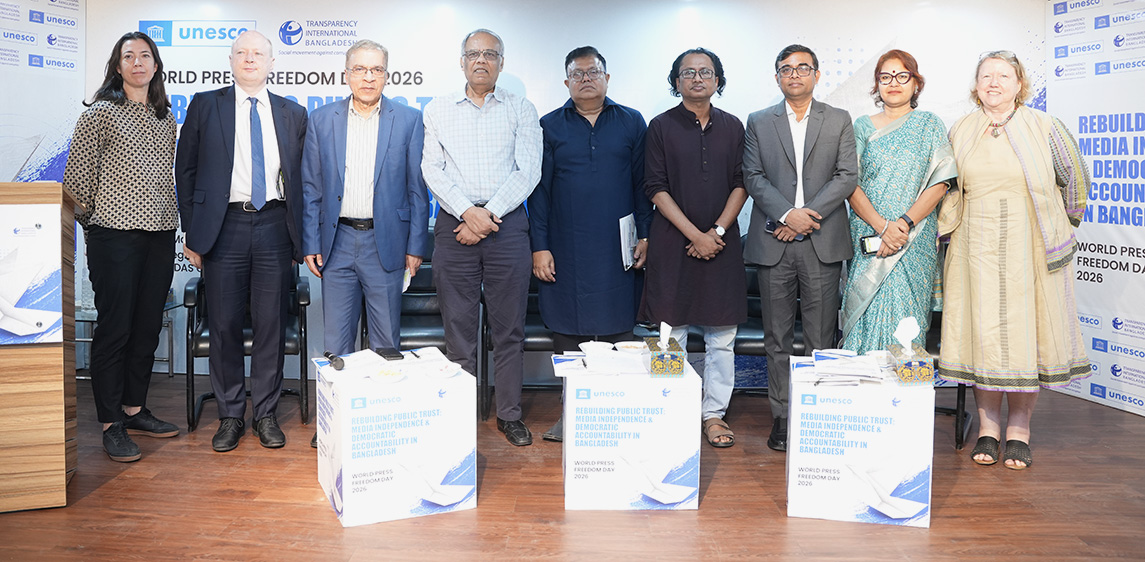
The gap between stated commitment and structural reform has been Bangladesh's recurring failure in press freedom. Successive governments have spoken the language of media independence while maintaining the legal instruments, advertising dependencies, and ownership arrangements that undermine it. The current government inherits both that failure and the opportunity to break from it. What is required is clear: repeal of laws that criminalize journalism; enforceable separation of media ownership from editorial control; genuine independence for state broadcasters; mandatory investigation of crimes against journalists; and sustained investment in media literacy. As the dialogue underscored, stronger editorial independence, higher professional standards, and enhanced media and information literacy — through collaboration among media, government, civil society, and development partners — are all essential to restoring public trust.
On this World Press Freedom Day, TIB reaffirms its call for the protection of freedom of expression and the recognition of journalism as a pillar of peace and democratic accountability. Those in power do not extend a courtesy to the public’s right to credible information. It is a democratic entitlement — one that TIB will continue to advocate for, in the conviction that a media environment worthy of public trust is both necessary and achievable.