Published: 02 April 2026
Since 2012, Transparency International Bangladesh (TIB)’s Investigative Journalism (IJ) Fellowship has served as one of the country's most powerful engines of accountability journalism. Each year, it provides a select group of reporters with financial support, expert mentorship, and institutional backing to pursue stories that would otherwise remain buried. In 2025, five journalists from print, online, and broadcast media produced reports that addressed Bangladesh’s most entrenched governance failures, ranging from ghost bridges in Pirojpur to stolen meals in government daycare centers.
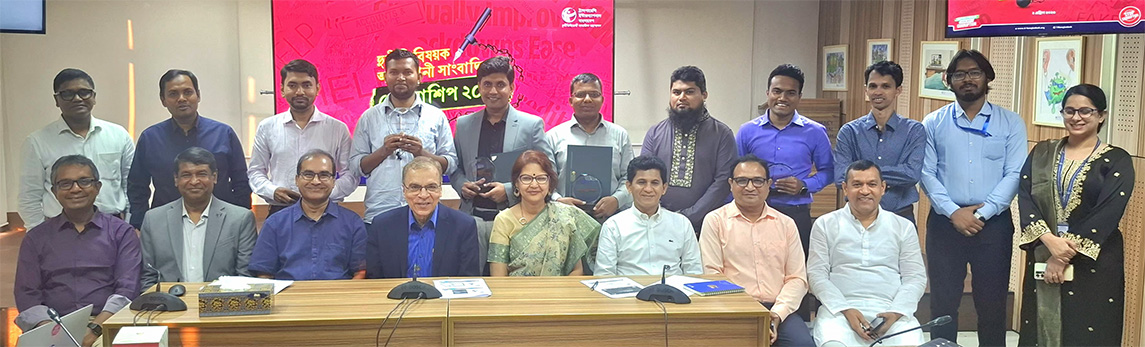
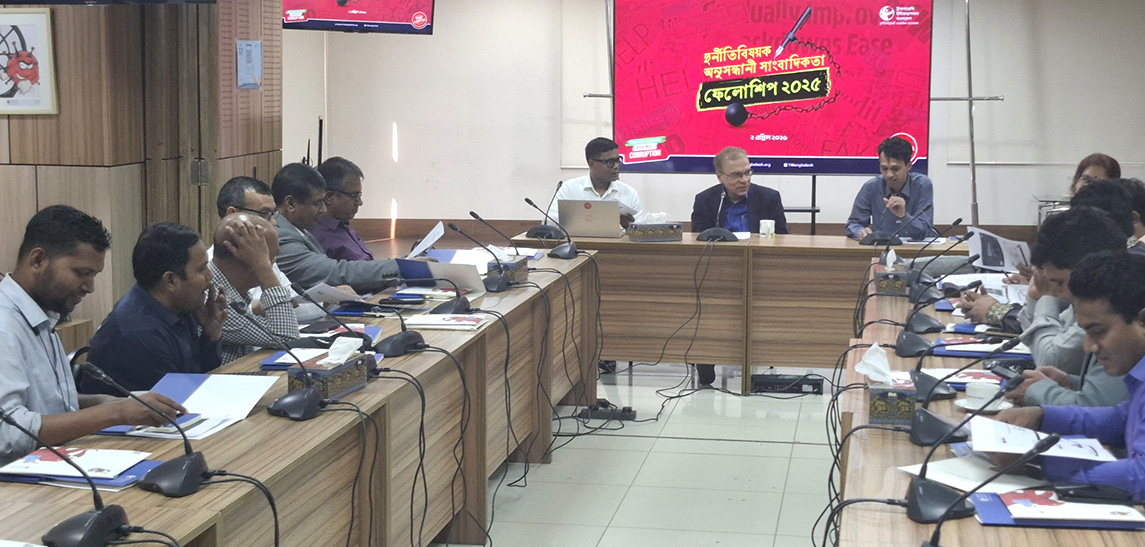
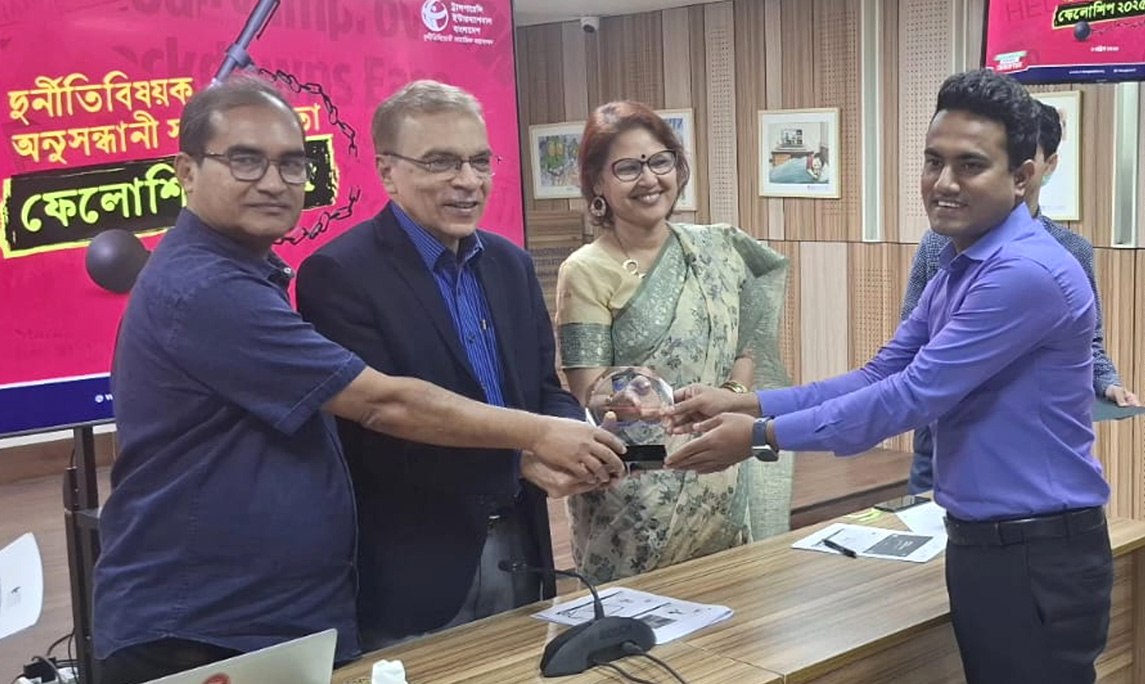
TIB's IJ fellows for 2025 have exposed the hidden machinery of corruption at tremendous personal and professional risk. This year, TIB recognized five exceptional journalists for their in-depth, fearless reporting. Today, TIB gave out certificates and crests to the five winners of the IJ Fellowship 2025 at its Dhaka office. The five investigative reports at a glance:
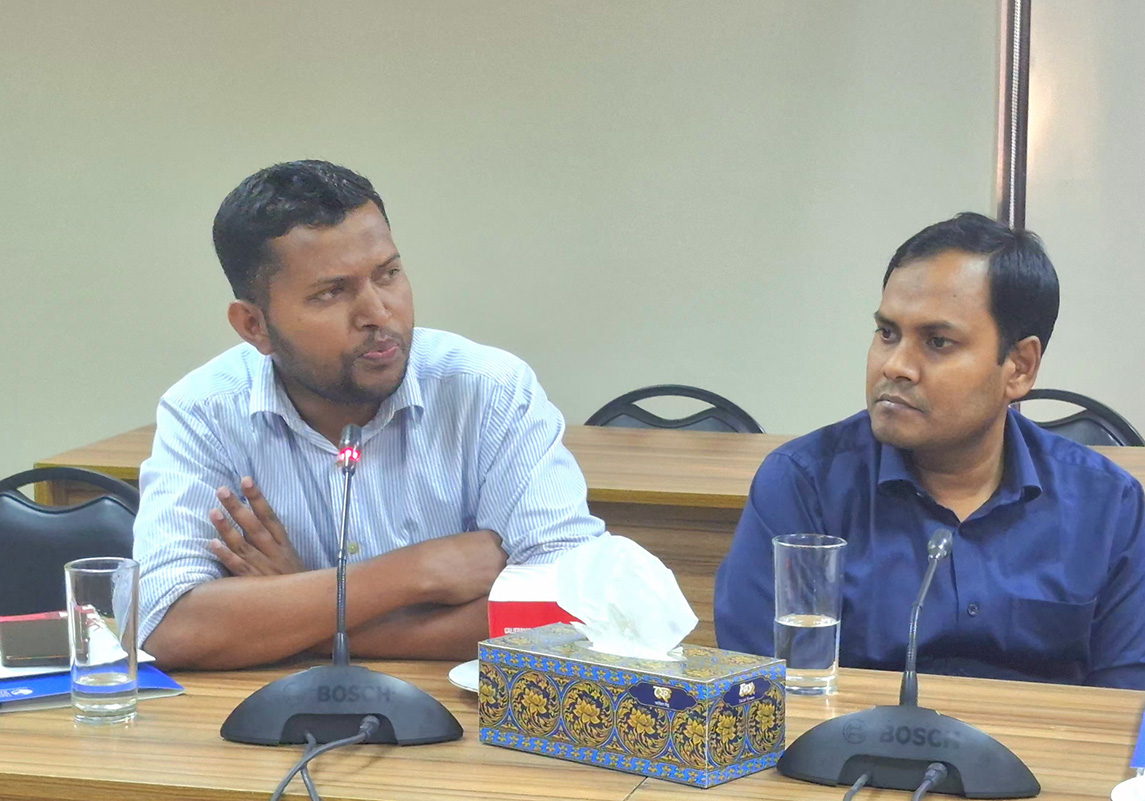
Rashidul Hasan (Daily Sun) exposed how 4 in 5 municipalities abandoned expensive integrated waste treatment plants, allowing billions of taka to be wasted while raw refuse continues to pollute forests and waterways. Report Links:
- Environmental sanitation effort falters as 4 in 5 municipalities
- Billons spent, waste still dumped into water bodies and forests
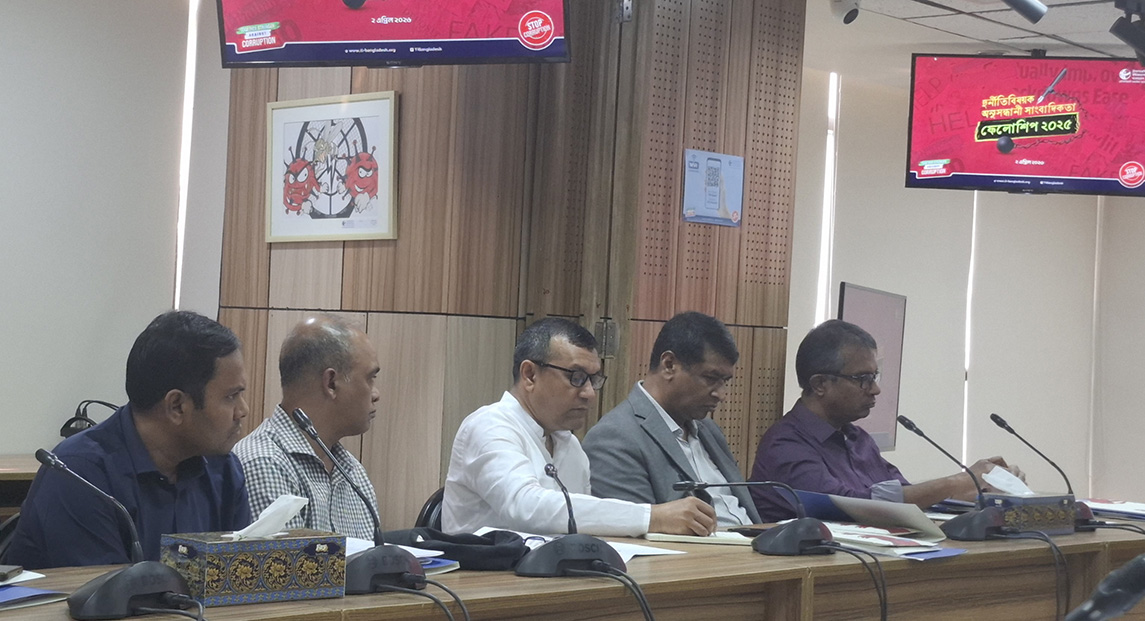
“Despite millions spent on advanced treatment plants and vehicle fleets in municipalities , poor planning has rendered them useless. For example, in Basurhat, facilities remain locked while trash fills canals; in Gazipur, a plant lacks road access; and in Sylhet, eleven expensive trucks share a single driver. This lack of coordination has turned vital sanitation infrastructure into expensive "showpieces" that fail to mitigate the very pollution they were designed to solve,” he said at the award ceremony and expressed gratitude to TIB and the Daily Sun editorial team for giving the reports proper treatment.
Muhammad Salah Uddin (Jago News) uncovered a hospital procurement racket where free diagnostic equipment was used as a trap to sell reagents at five times the market price, draining the public healthcare budget.
Report Links:
- Part-1: Fraud in government hospitals for ‘free’ machines
- Part-2: Collusive plunder by administrators and vendors
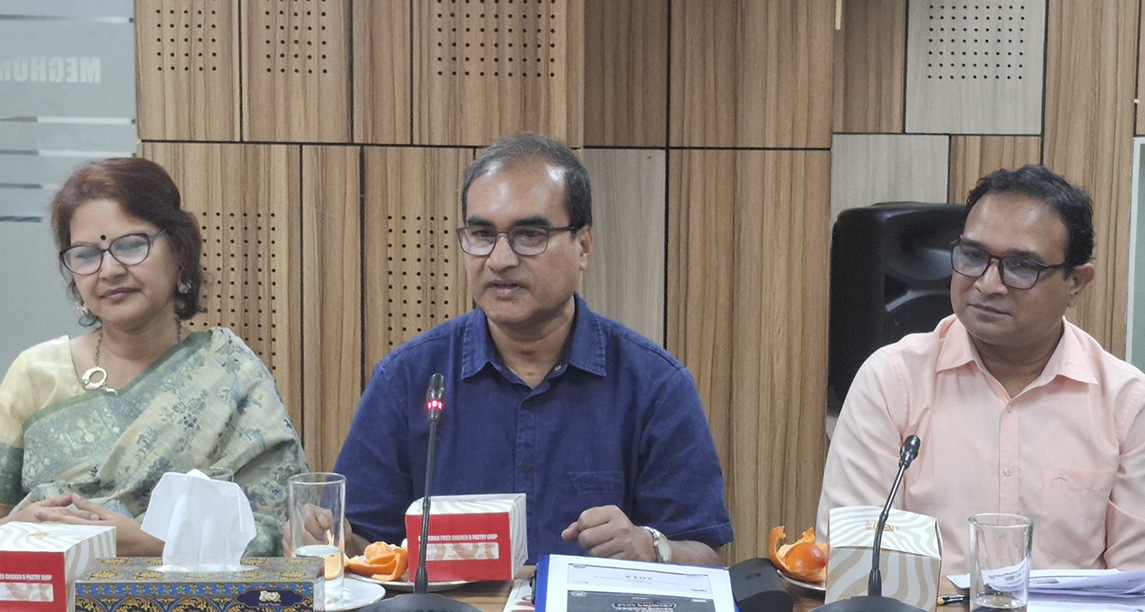
At the award ceremony, Salah Uddin said, "It has been a long journey. I developed the idea for this report while building sources and through the guidance of a so-called 'offender.' I feel that the journalism I practiced over the past 12 years was actually nothing; I have poured my heart and soul into this single report." He also expressed gratitude to his mentor, and added, "I thank TIB. The guidance it provides represents true journalism. If this continues, both the journalists and the country will benefit"
Md. Imdadul Haque (Channel 24) revealed how contractors tied to a former MP fraudulently claimed 350 crore Taka for nearly 200 bridges in Pirojpur that were never built.
Report Links:
- Two Hundred bridges that only exist on paper, absent in reality
- Maharaj family linked to grand plan for bridges in Pirojpur that don't exist
Mohammad Omar Farok (Star News) documented how a Bangladesh Air Force firing range illegally leased 280 acres of the protected Madhupur Sal forest for undisclosed cash payments.
Report Links:
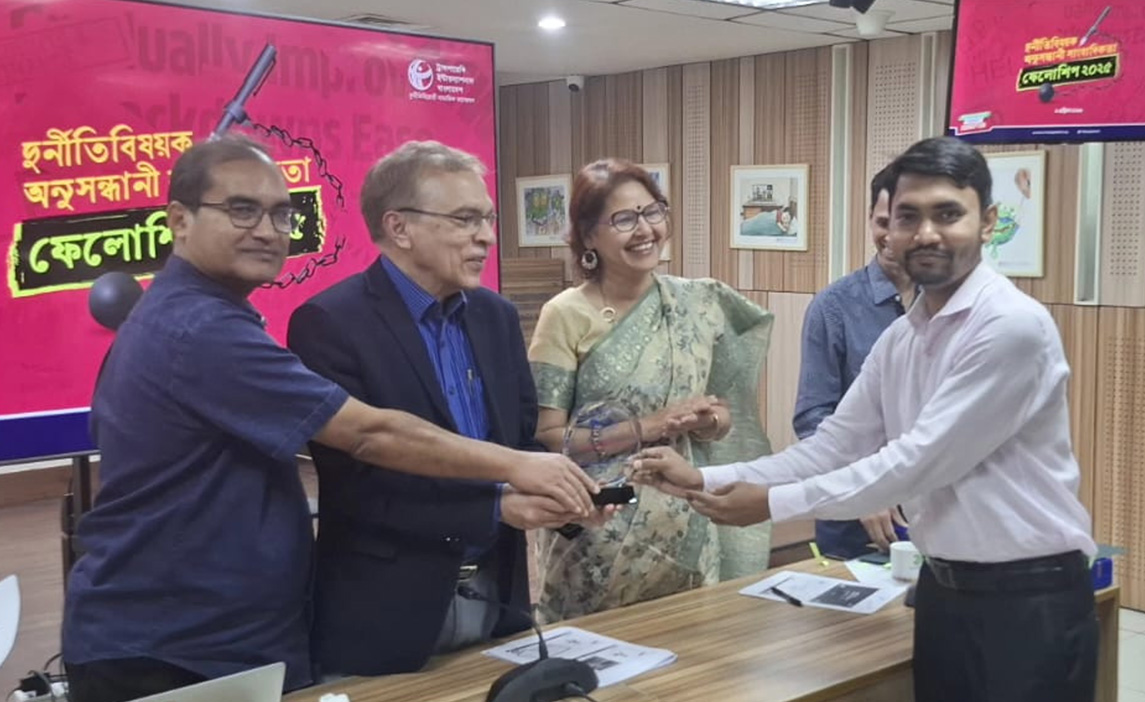
"This story contained a vast amount of highly organized data. I was confident that if the report was developed in a watertight and information-rich manner, there would be no issues. We utilized the pre-election period as an opportunity. After the story was aired, I learned that it was discussed within ISPR. They felt somewhat embarrassed and even looked into those behind the report. We collectively embraced this opportunity to produce a high-quality report. As a new television channel, we are eager to take on such challenging tasks and risks. In this regard, TIB's initiatives are truly commendable to us, and we hope to be more deeply involved in such work in the future," said Farok.
Dalwar Hossen (Daily Samakal) showed how officials overstated child attendance records at government daycare centers to steal food subsidies, depriving children of proper nutrition.
Report Links:
- Service crisis in government-run child day care centres
- Multiple anomalies in twenty child day care centres of the project
- Rejoinder and Reporter's Statement
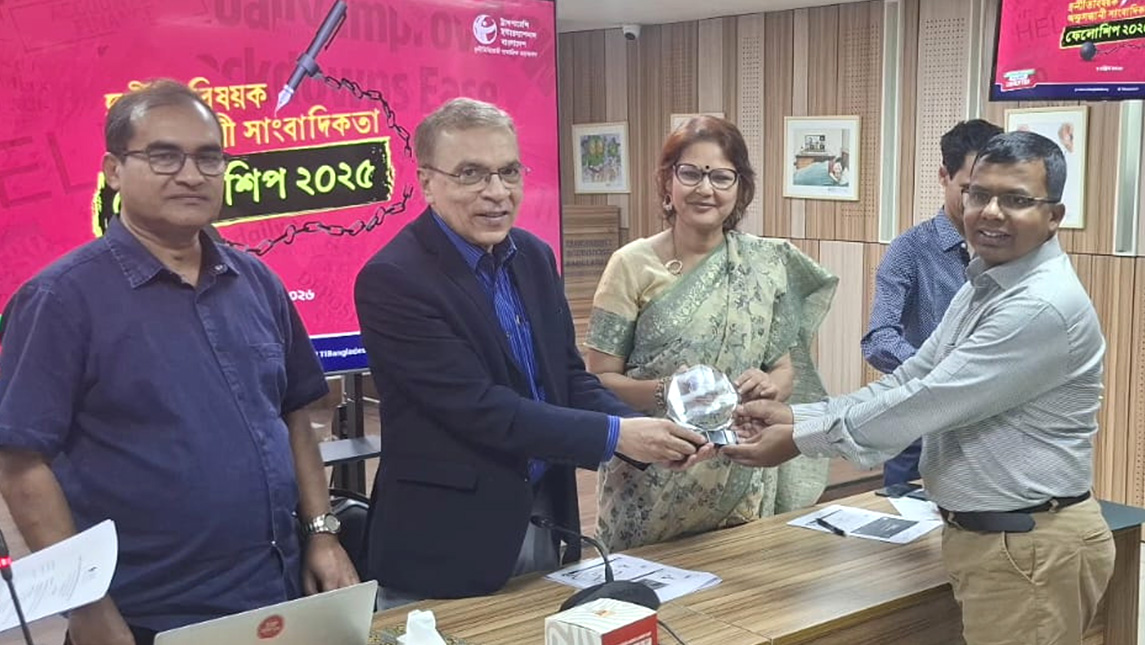
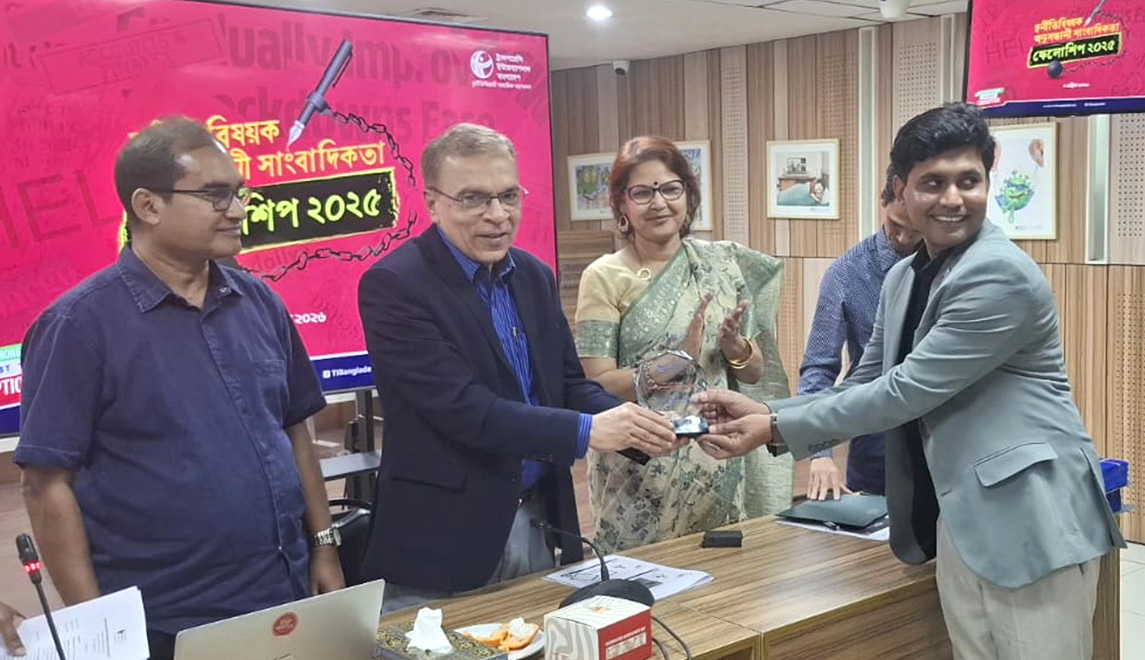
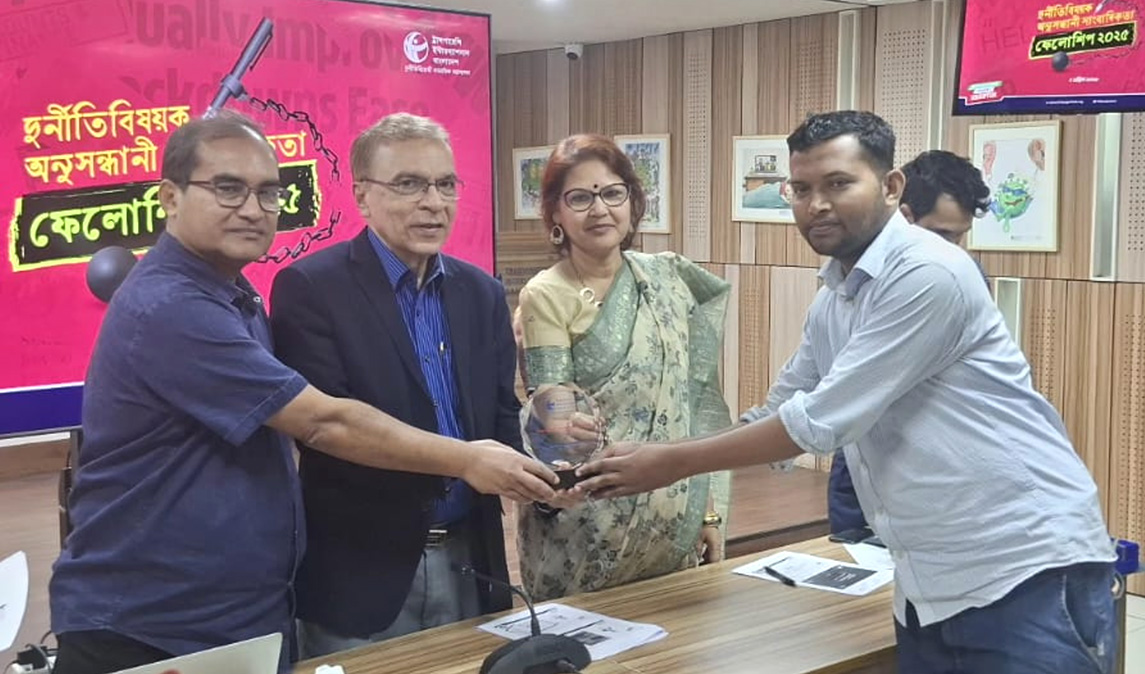
Therefore, IJ fellowship was open to full-time journalists working in print, online, and electronic media who possessed a minimum of three years of professional experience and had produced at least one investigative report. Each application required a detailed investigative proposal of up to 1,000 words covering the project's rationale, field plan, timeline, a previously published investigative work, and other necessary processes.
Commending the fellowship winners, senior journalist and one of the mentors Shahnaz Munni noted, “Selecting just five topics from 27 proposals proved to be a formidable challenge. Notably, the three of us serving as mentors conducted face-to-face interviews with every applicant who submitted a proposal. During these sessions, we sought to evaluate the depth of each reporter's insight into their subject, their investigative approach, and their strategic roadmap. Through rigorous questioning, we identified the proposals with the greatest potential for impactful and unique reporting, ultimately finalizing these five. I extend my sincere congratulations to all of them for the successful completion and publication of their reports."
Resonating with her, Tauhidur Rahman, another honourable mentor of this year’s fellowship and the editor of ‘Potaka News’ lauded the "unprecedented" output from the current batch of fellowship winners. However, he also warned that media houses often fail to sustain investigative skills. He urged media management to prioritize investigative reporting and requested TIB provide preliminary training for reporters. "This would make the task easier for both mentees and mentors, resulting in much better production," Rahman stated.
Nevertheless, the IJ fellowship represents far more than financial support to journalists. It is TIB's long-term commitment in a culture of accountability. Each year, fellows receive not only funding but also editorial mentorship from seasoned investigative journalists, access to professional networks, and the institutional credibility that comes from working under TIB's banner.
TIB Executive Director Dr Iftekharuzzaman expressed stern commitment to continue this practice. “One of TIB’s core mandates is to strengthen investigative journalism and foster an environment where it can thrive and TIB cannot fulfils its mission of establishing good governance and preventing corruption in isolation,” he said. He also said that, “In future TIB may provide need-based training for the fellows and will try to ensure policy-level follow-up for every report produced.”
It must be mentioned here that the impact of these investigative reports extend beyond individual stories! They spark public debate, prompt parliamentary questions, and in some cases lead directly to policy reviews. In a media environment where investigative journalism is resource-intensive and commercially difficult to sustain, TIB's IJ fellowship fills a gap by nurturing the reporters who hold power to account even when no one else will.