Press Release
Dhaka, 11 November 2026: Transparency International Bangladesh (TIB) has expressed outrage and strongly condemned remarks made by the State Minister for Local Government, Rural Development and Cooperatives, which appear to legitimise the criminal practice of bribery under the guise of gifts. At the inauguration of a training programme for newly appointed assistant engineers of the Local Government Engineering Department (LGED) on 10 November, the State Minister reportedly remarked that gifts given to engineers from contractors’ profits after bills are paid promptly, provided the quality of work is maintained, do not constitute bribes and may be accepted. TIB questions whether, by suggesting that government engineers may receive personal benefits in the name of gifts in return for performing their official duties, the State Minister is, in effect, attempting to legitimise bribery. TIB has demanded the immediate withdrawal of the State Minister’s remarks, clarification of the government’s position on the matter, and accountability of both the State Minister and the secretary whose advice was reportedly cited in support of the remarks.
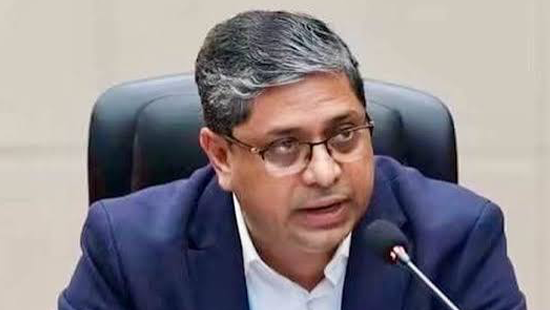
Dr Iftekharuzzaman, Executive Director of TIB, said, “Verifying the quality of work, accepting completed work and ensuring prompt payment of bills in accordance with regulations are part of a government engineer’s routine responsibilities. Engineers receive salaries and benefits from public funds precisely to perform these duties. Why, then, should they accept illicit payments from contractors under the guise of ‘gifts’ in return for carrying out their responsibilities? Is the State Minister legitimising bribery by suggesting that gifts may be accepted for performing these duties? Is he, in effect, encouraging the acceptance of bribes? Advising newly appointed engineers, whose responsibility is to prevent irregularities in public procurement, to earn money outside the rules from contractors at the very outset of their careers is grossly irresponsible and a violation of the law. Such remarks by a State Minister could legitimise demands for bribes at the field level and lead to a wider proliferation of corruption. In the name of ‘thinking differently’, is the State Minister attempting to further foster and protect an environment conducive to bribery and corruption in public procurement? It is for the government to clarify whether these remarks reflect its own position.”
The TIB Executive Director further said, “The State Minister must publicly identify the law or regulation that allows engineers to receive personal benefits from contractors’ profits as a reward for performing their routine duties. Under Section 161 of the Penal Code, accepting any gratification or reward beyond legally authorised remuneration for performing an official duty is punishable by law. Section 165 also provides for punishment for accepting any valuable item from a person in connection with official duties. Meanwhile, under Rule 5(1) of the Government Servants (Conduct) Rules, 1979, subject to the exceptions specified in the Rules, prior government approval is required to accept gifts that create an official obligation towards the donor. Rule 5(4) of the same Rules sets a value limit of BDT 500 for each gift received by secretaries or officers of equivalent rank from specified sources. On the other hand, Paragraph 6(2) of Schedule 20 of the Public Procurement Rules, 2025 allows low-value items such as diaries, calendars and pens bearing an organisation’s logo, with a maximum value of BDT 5,000 per item. Neither of these limited provisions allows engineers to receive personal benefits from contractors’ profits under the guise of gifts as a reward for performing official duties.”
Highlighting the particular risk of conflicts of interest arising from the State Minister’s remarks, Dr Iftekharuzzaman said, “How can an engineer remain impartial if they accept personal benefits from the very contractor whose work they are responsible for supervising? Such transactions can influence decisions regarding supervision and certification of bills, while also undermining equal opportunities for other contractors. Moreover, collusion between contractors and engineers will further increase corruption. The same practice could spread to other government departments, normalising the collection of illicit payments under the guise of gifts as a prerequisite for service delivery. What is being claimed today as a voluntarily offered gift could, tomorrow, turn into a government-sanctioned condition for extracting bribes from citizens seeking services to which they are entitled.”
The State Minister referred to advice from a senior secretary in his remarks. In this regard, Dr Iftekharuzzaman said, “If the senior secretary did indeed offer such advice, as described by the State Minister, serious questions arise about the secretary’s professional integrity and ethical fitness to remain in office. It is also reasonable to question whether there is an attempt to institutionalise collusive corruption between the State Minister and the senior secretary in this matter. Such a position is embarrassing and self-defeating for both the government and the ruling party. It also contradicts the government’s election manifesto.”
Referring to the government’s previous experience with the Road Transport and Bridges Minister’s declaration that extortion was a matter of negotiated transactions, the TIB Executive Director reminded the government that such unrestrained, corruption-enabling positions taken by individuals holding responsible positions within the government should be recognised as warning signs for the government itself.
TIB has called on the State Minister to publicly apologise for his remarks concerning gifts from contractors and withdraw them unconditionally. In addition, TIB has demanded that the government seek a formal explanation from the State Minister and ensure his accountability, as well as verify the authenticity of the advice reportedly given by the senior secretary mentioned in his remarks and take appropriate legal action accordingly.
Media Contact:
Mohammad Tauhidul Islam
Director, Outreach and Communication
Phone: +8801713107868
Email: tauhidul@ti-bangladesh.org