Published: 27 January 2026
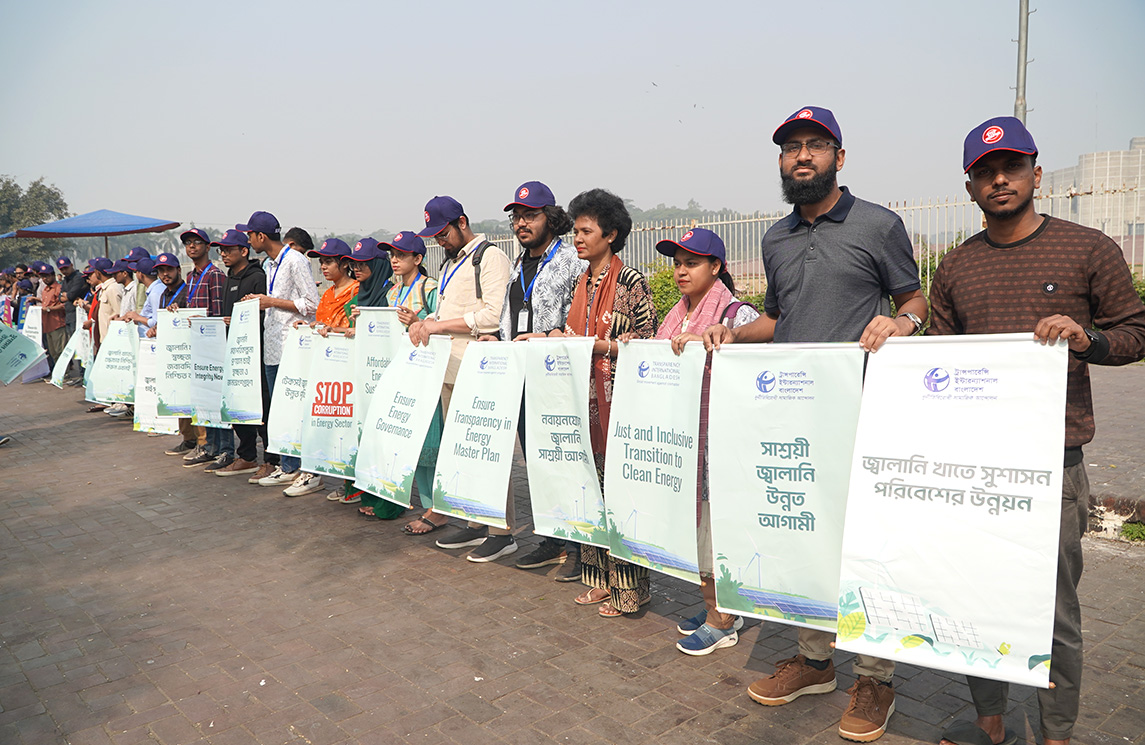
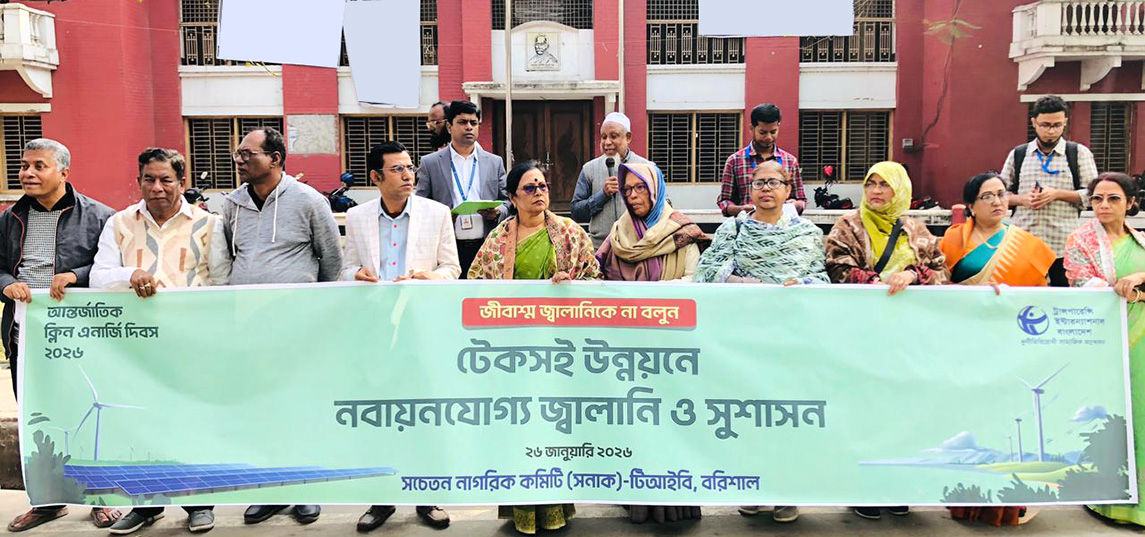
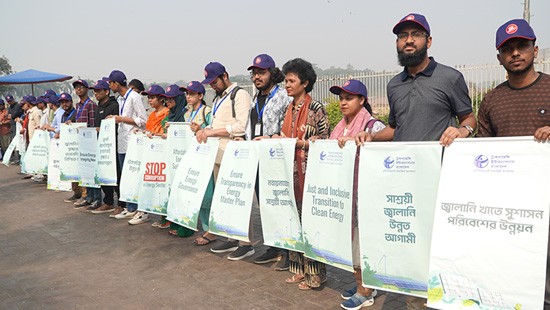
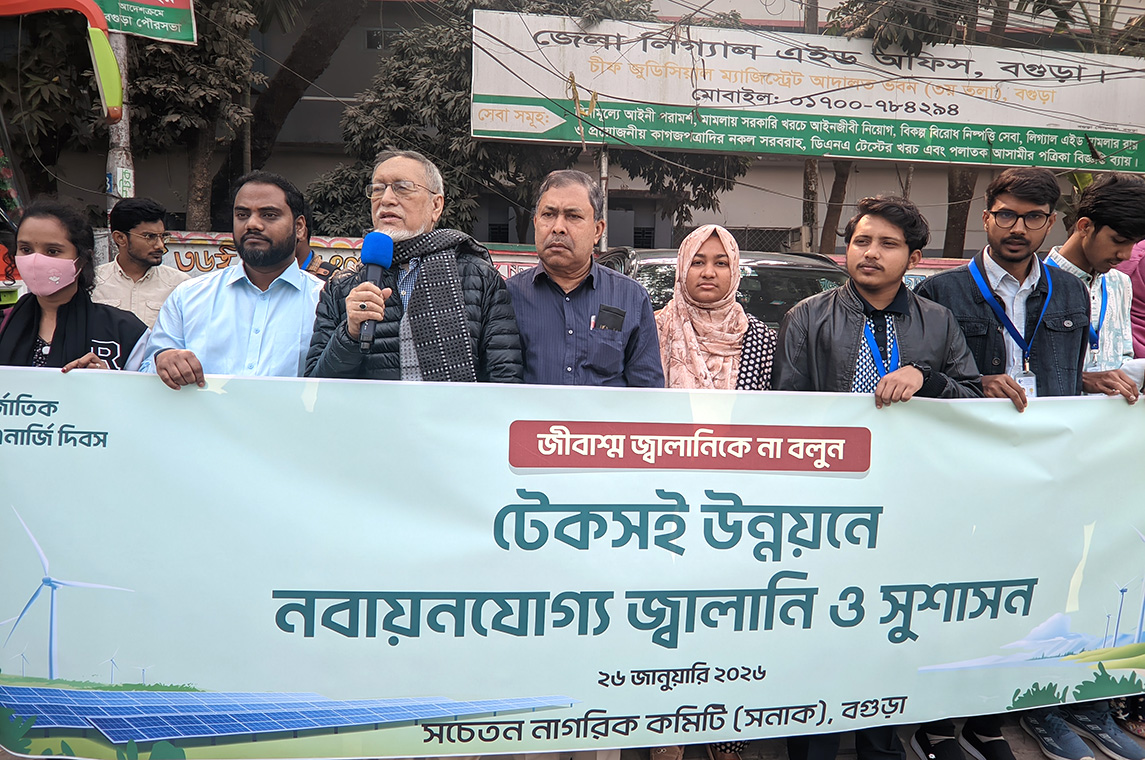
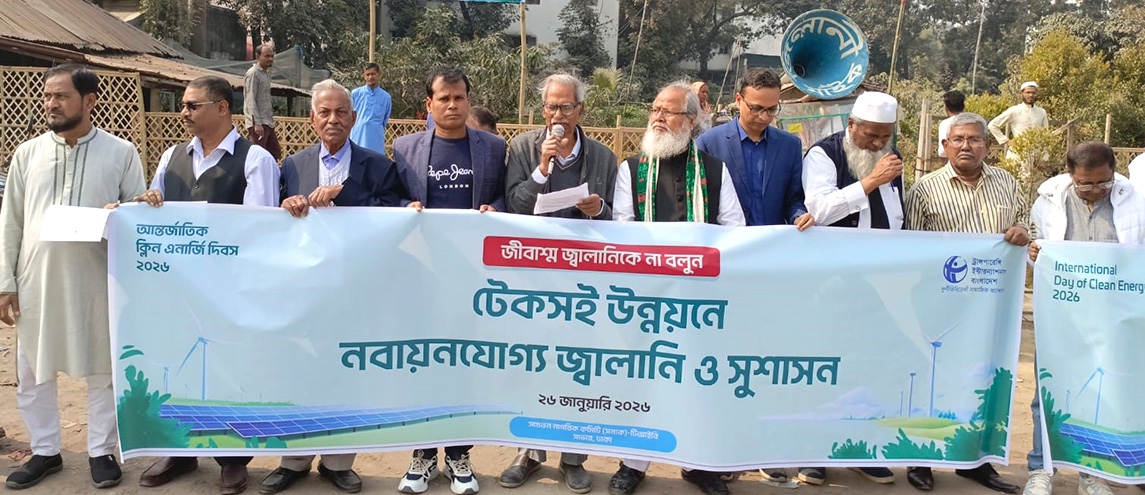
The United Nations General Assembly proclaimed the International Day of Clean Energy in 2023, explicitly emphasizing "a just, inclusive, and sustainable global transition," language that implicitly demands governance transparency and stakeholder participation. On the occasion of the International Day of Clean Energy 2026, TIB observed the day in Dhaka and across the country to place energy governance at the center of the national conversation. As part of the observance, TIB organized a human chain in front of the National Parliament Complex to clearly articulate reform-oriented demands for a transparent, accountable, and renewable energy–focused policy framework.
TIB has drawn attention to how energy planning choices, investment priorities, and institutional arrangements are currently determining the future trajectory of the sector. The organization has emphasized the importance of strengthening openness in policy formulation and ensuring that energy decisions are guided by public interest, climate responsibility, and long-term sustainability. TIB emphasized that Bangladesh's ongoing reliance on fossil fuels, facilitated by a lack of transparency, presents significant risks to national security and public survival in the context of climate change. Transparency in energy governance is not just procedural but existential for a country that is vulnerable to climate change.
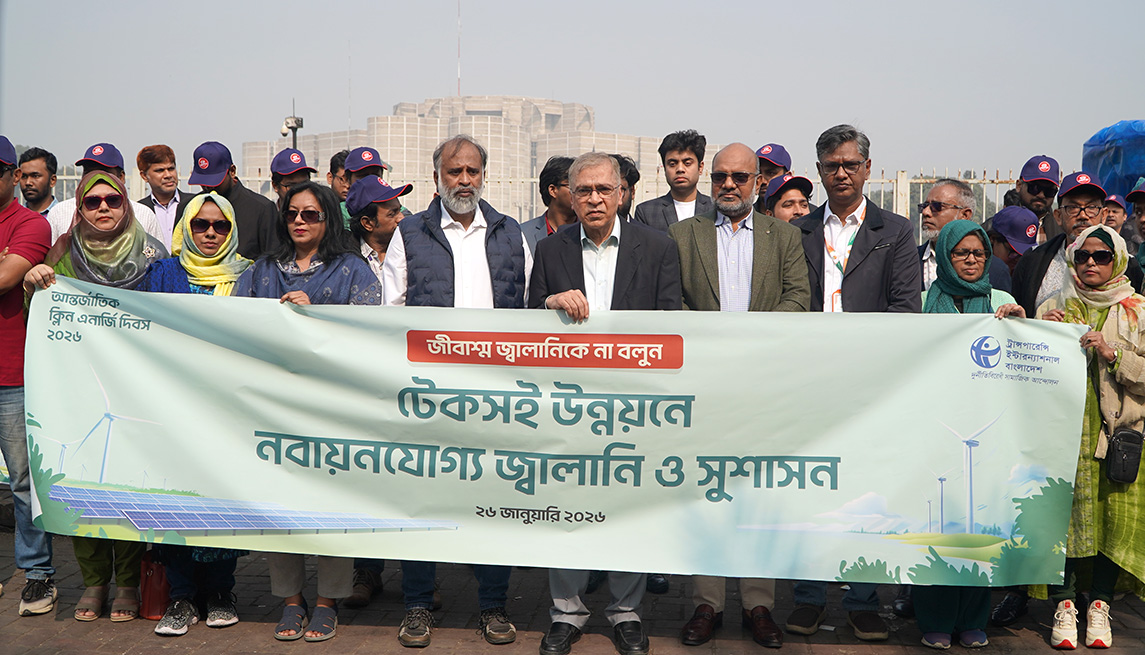
In this context, speaking at a human chain demonstration in front of the National Parliament Complex, Dr. Iftekharuzzaman, Executive Director of TIB, directly challenged the government's commitment to transparency in the energy sector. "The current energy master plan reflects the influence of both domestic and foreign fossil fuel interest groups, a remnant of the previous authoritarian and corrupt regime," he stated, positioning Bangladesh's energy crisis as primarily a governance issue. He has also stressed the need to reinforce institutions responsible for renewable energy development, and he has highlighted the draft Energy and Power Sector Master Plan 2025 as a critical opportunity to embed transparency and participation into national energy planning.
The organization has advocated for inclusive consultations, clear disclosure of assumptions and data, and independent review processes so that the master plan reflects a balanced, forward-looking vision aligned with renewable energy goals. Key enablers of renewable energy expansion include greater institutional autonomy, enhanced technical capacity, and stronger coordination among agencies. Clear land use decisions, transparent project approval procedures, and predictable policy signals can further foster an environment that encourages responsible and sustainable investment. Framing clean energy as both a development priority and a governance imperative, TIB has emphasized that transparency and accountability are not secondary considerations. They are foundational conditions for building public trust, improving policy credibility, and ensuring that the benefits of clean energy reach communities equitably.
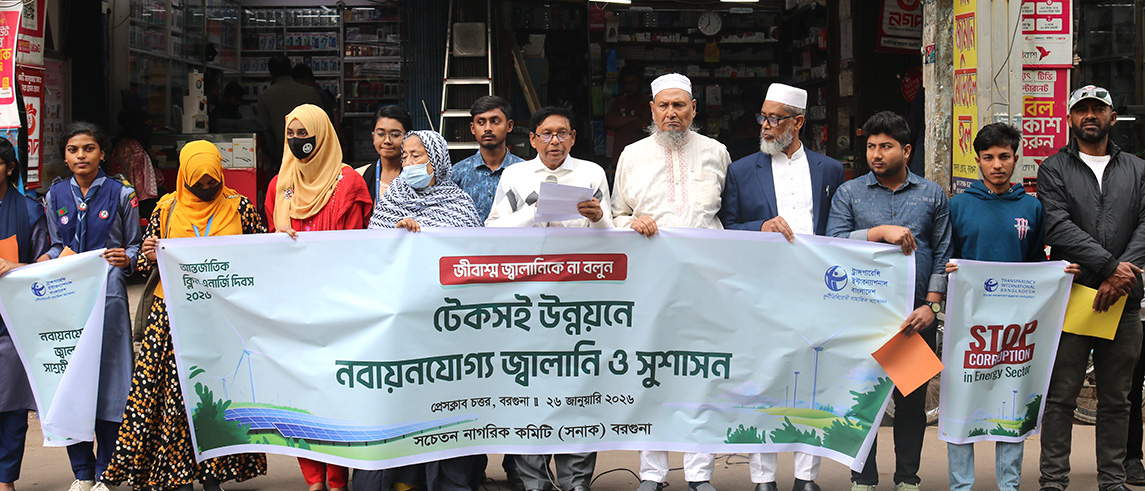
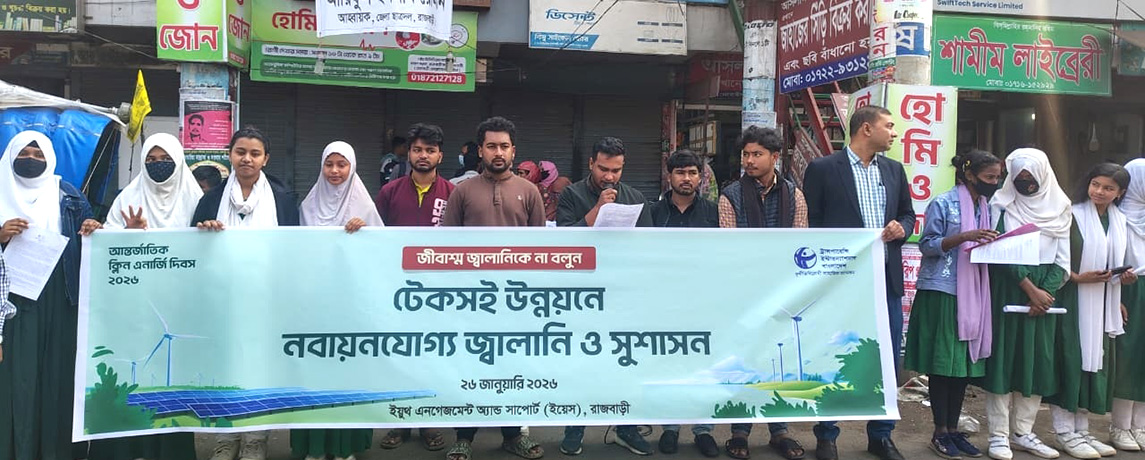
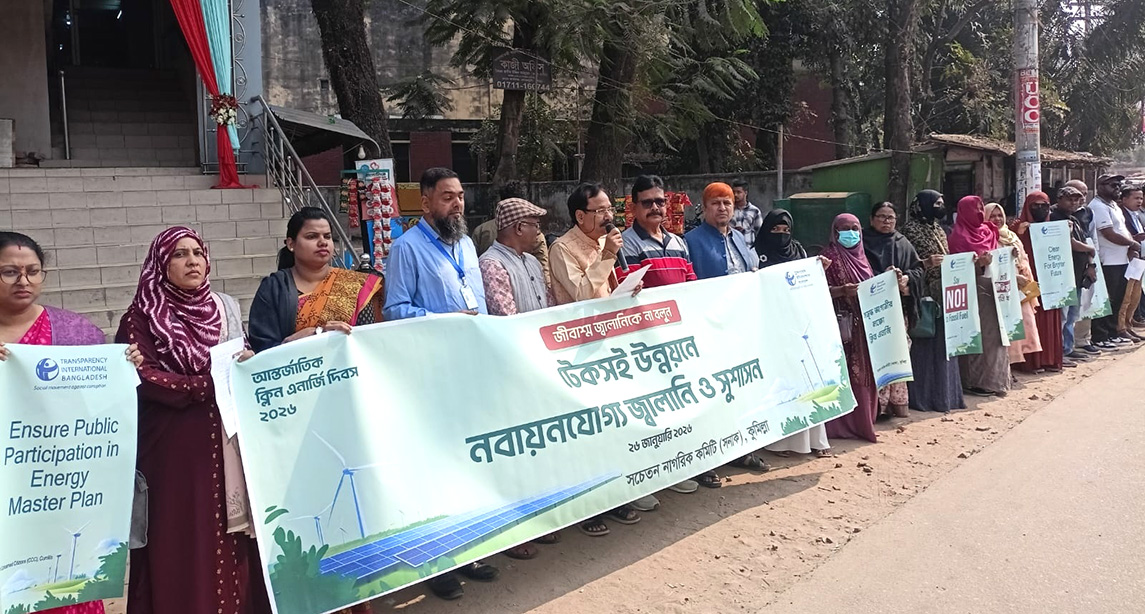
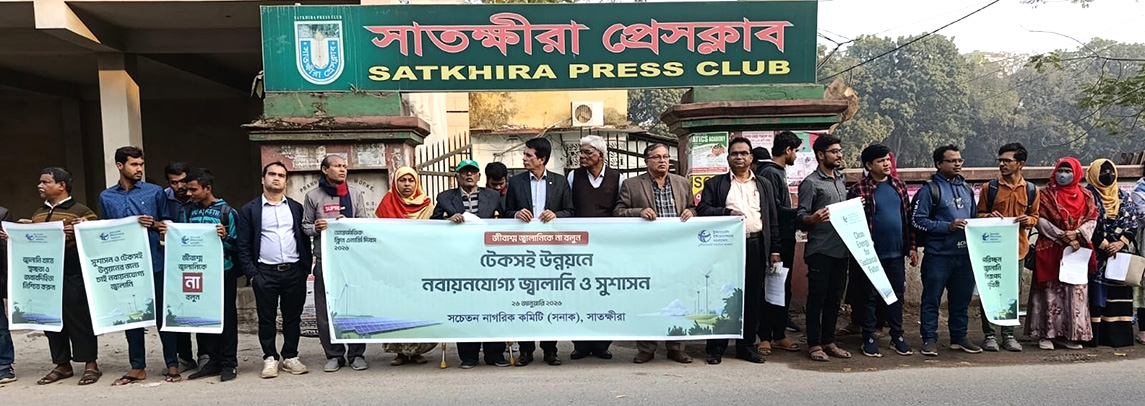
To advance this agenda, TIB placed a set of clear and actionable recommendations before policymakers during the human chain organized on the International Day of Clean Energy 2026. At the program, TIB explicitly called for strong political commitment to gradually reduce dependence on fossil fuels and adopt a time-bound roadmap toward 100 percent renewable energy-based electricity generation by 2050. TIB also advocated establishing independent oversight and regulatory authority to safeguard integrity in the energy sector. TIB prioritized strengthening the institutional and operational autonomy of the Sustainable and Renewable Energy Development Authority. The organization further called for aligning all energy-related policies under a unified renewable energy framework, simplifying net metering, introducing feed-in tariffs, ensuring transparency in project approval and land acquisition processes, and expanding investment in renewable energy research and innovation. Utilizing land from cancelled coal and LNG projects for renewable installations, particularly solar power, was highlighted as a practical and forward-looking measure.
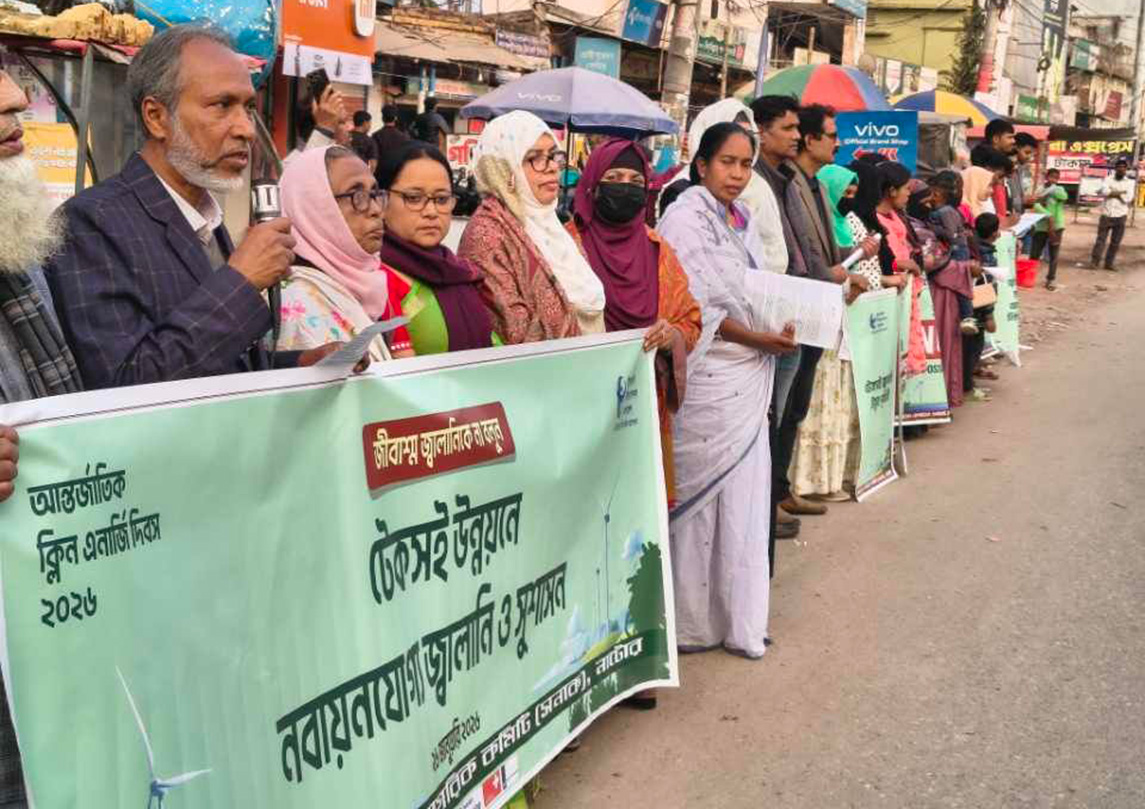
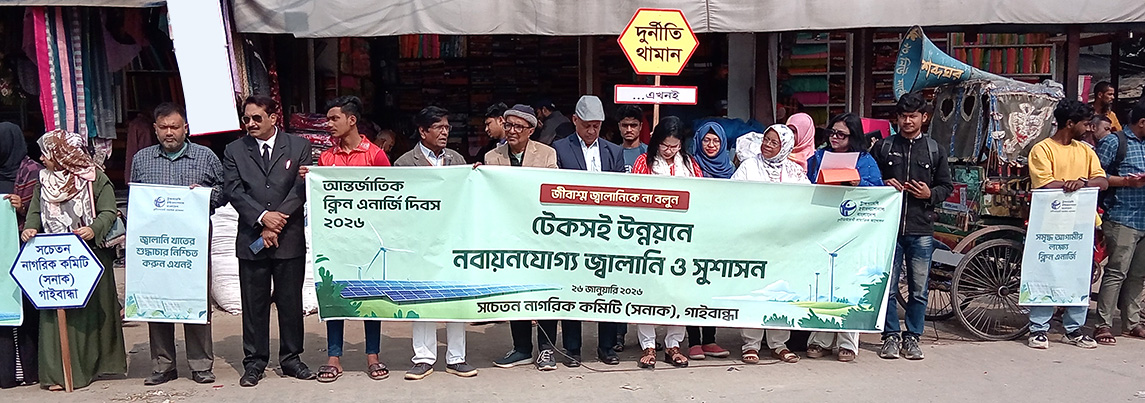
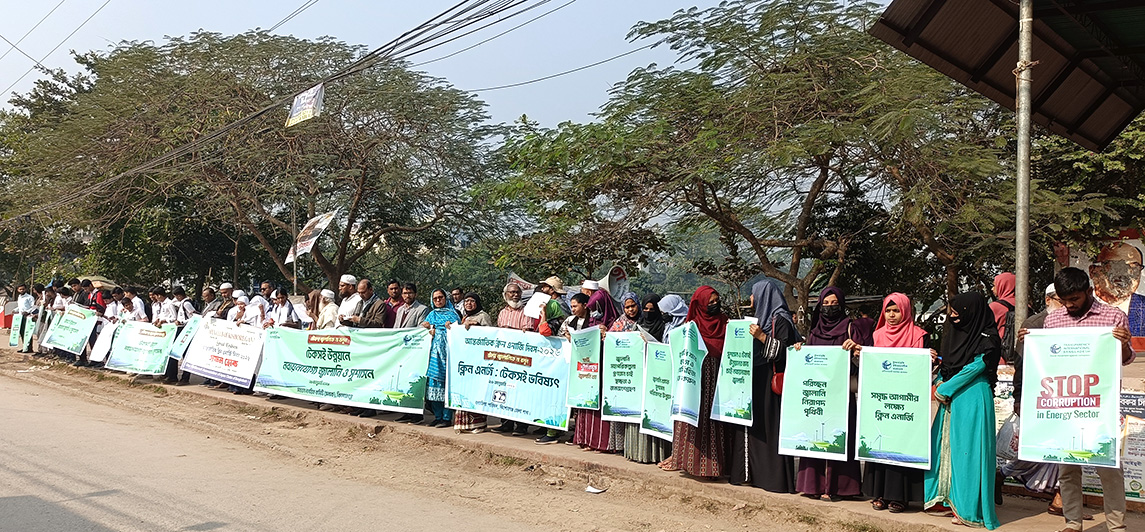
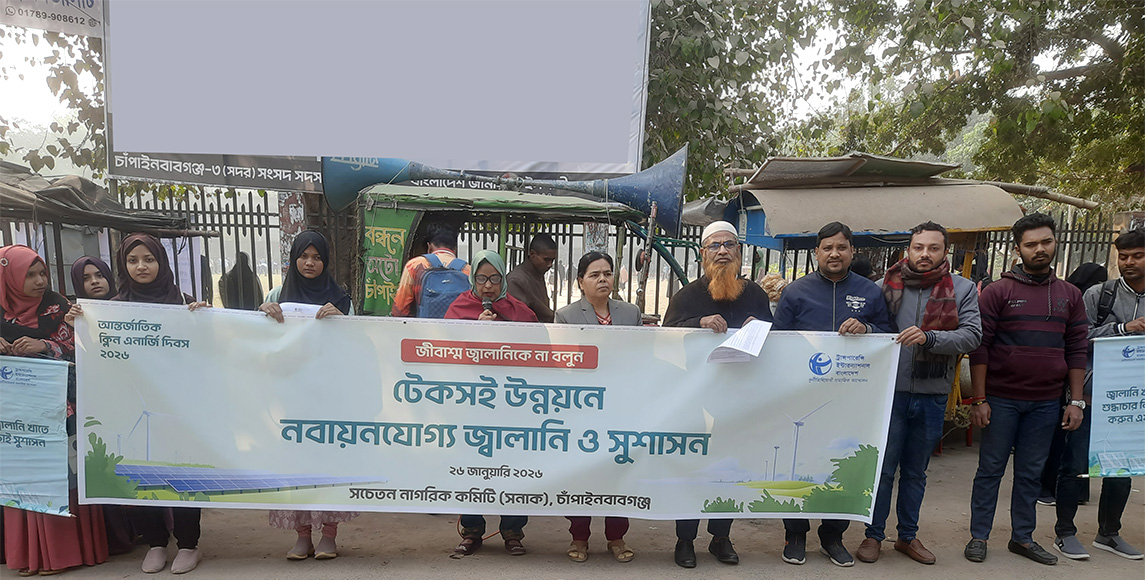
TIB’s advocacy reflects a broader momentum within civil society. A range of like-minded organizations, research institutions, environmental networks, and citizen platforms are actively engaging on governance challenges in the energy sector. The unprecedented coalition of 20 national organizations, supported by grassroots mobilization across 45 districts, signals broad-based public demand for fundamental change in how energy decisions are made, financed, and implemented in Bangladesh. Through research, policy dialogue, public awareness, and collective action, these actors are contributing to a growing demand for transparency, accountability, and people-centered energy reform. The International Day of Clean Energy 2026 observance marks a potential turning point in Bangladesh's energy discourse. What began as advocacy for renewable energy has evolved into a comprehensive movement for reform in energy sector governance, with transparency and accountability emerging as central demands alongside technical transitions.
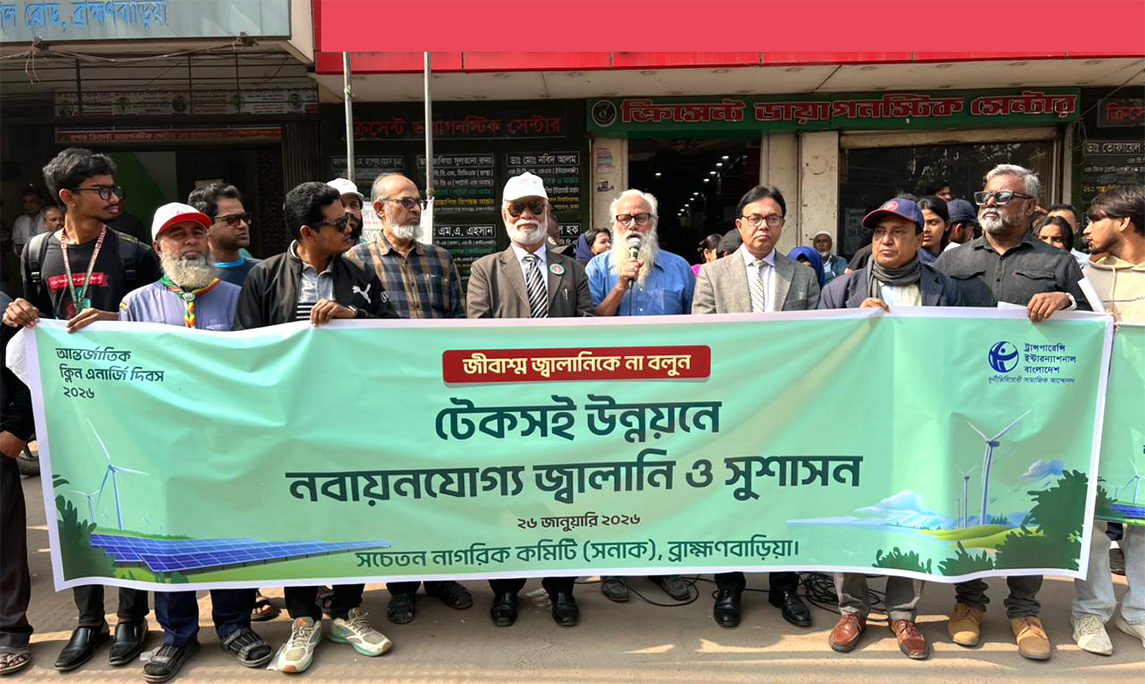
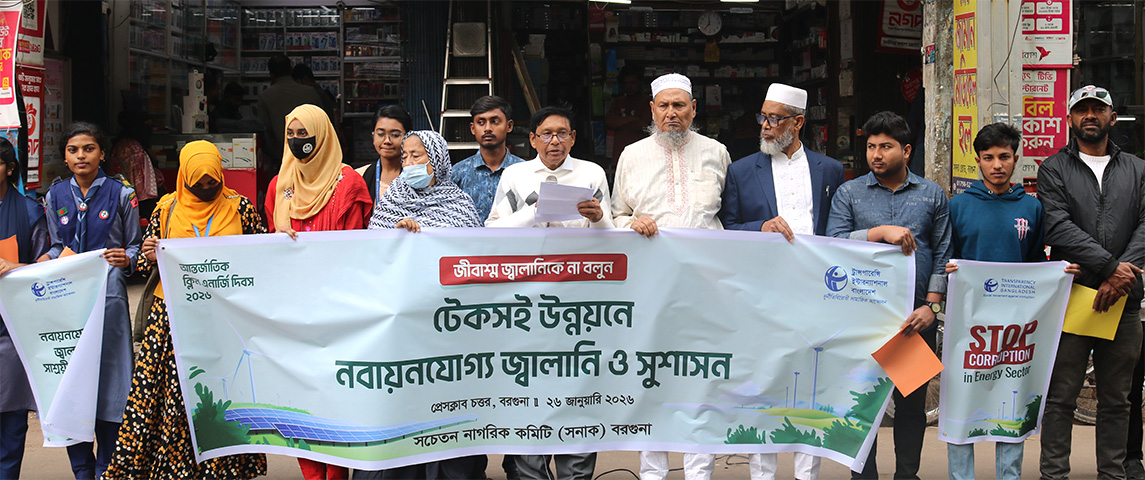
As TIB and its civil society partners continue to flag governance deficits in the energy sector, the interim government and future elected leadership face mounting pressure to demonstrate that Bangladesh's clean energy transition will be built on foundations of transparency, accountability, and genuine public participation rather than the corrupt, opaque systems of the past. "The choice is clear," Dr. Iftekharuzzaman concluded. "Bangladesh can continue down the path of fossil fuel dependence and governance failures, or it can embrace a transparent, accountable, renewable energy future. The people have spoken. Now it is time for those in power to listen."