Published: 15 December 2025

Deep-rooted bureaucratic resistance and non-transparent contracts continue to block Bangladesh's transition to renewable energy, despite government commitments and growing global pressure for decarbonization. This reality emerged clearly during the Bangladesh Energy Conference 2025, where policymakers, regulators, and civil society gathered to confront the governance failures holding back clean energy development.
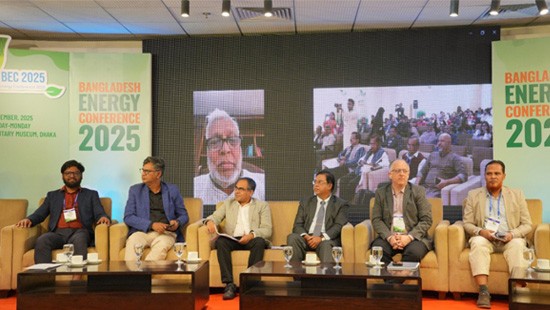
The 3rd Bangladesh Energy Conference 2025 was held from 6 to 8 December 2025 at the Bangladesh Military Museum, Dhaka, jointly organized by the Bangladesh Working Group on Ecology and Development (BWGED) in collaboration with Transparency International Bangladesh (TIB) and sixteen co-organizers that brought together approximately 400 participants over three days.

The conference was inaugurated by Adviser Syeda Rizwana Hasan of the Ministry of Environment, Forest, and Climate Change as the Chief Guest. She stressed that Bangladesh's shift from fossil fuels to renewable energy is a long-term structural process that requires consistent policy direction, integrity and good governance, and strong institutional oversight. She also cited rapid progress in the government's initiative to install solar panels on the rooftops of all government buildings.
Other distinguished speakers at the inaugural session included Dr. Khondakar Golam Moazzem, Research Director of the Centre for Policy Dialogue (CPD); Shahriar Ahmed Chowdhury, Chairman of the Center for Renewable Energy Services Ltd. (CRESL); Abil Bin Amin, Executive Director of the Ethical Trading Initiative (ETI) Bangladesh; Nurul Alam Masud, Chief Executive of the Participatory Research and Action Network (PRAAN); Abul Kalam Azad, Manager for Just Energy Transition at ActionAid Bangladesh; Sekender Ali Mina, Executive Director of the Safety and Rights Society (SRS); Advocate Shimonuzzaman, Director of Research at Lawyers for Energy, Environment and Development (LEED); Banasree Mitra Neogi, Director for Rights & Governance at Manusher Jonno Foundation; and Dr. Kazi Maruful Islam, Convener of BWGED. Each speaker shared insights on governance, policy coherence, and inclusive approaches for Bangladesh's renewable energy transition.

Government representatives acknowledged long-term structural challenges in the renewable energy sector. Muhammad Fouzul Kabir Khan, Adviser of the Ministry of Power, Energy and Mineral Resources, stated that entrenched interests within the electricity and energy sectors resist transparency and competition. He emphasized that while the government has introduced tax reductions on renewable equipment and simplified approval processes, deeper institutional reform remains necessary. Jalal Ahmed, Chairman of the Bangladesh Energy Regulatory Commission, noted that lingering policy barriers prevent renewable energy uptake despite industry demand. The ready-made garment sector faces pressure from global markets requiring renewable energy compliance, yet coordination between industries and the power sector remains inadequate.

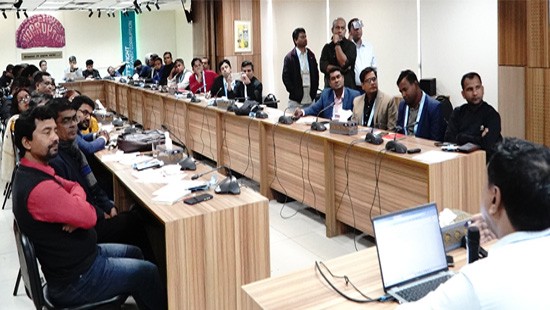
The conference highlighted how governance failures intersect with social justice concerns. A dedicated session moderated by TIB's Ashna Islam explored how women, indigenous communities, and marginalized groups remain excluded from energy transition planning. Participants stressed that inclusive participation must extend beyond civil society consultation to actual decision-making power. Md. Newazul Moula, Coordinator of Energy Governance at TIB, presented research showing how bureaucratic inertia, regulatory ambiguity, and weak oversight create persistent barriers. These governance gaps affect every stage from project approval to implementation, undermining even well-intentioned renewable energy policies.
Dr. Iftekharuzzaman, Executive Director of Transparency International Bangladesh (TIB), pointed to the core problem during the conference held in early December. The energy sector suffers from unclear decision-making and contracts that favor fossil fuels, including unsolicited agreements that bypass competitive processes. Without dismantling these non-transparent practices and eliminating rent-seeking opportunities, he argued, any transition will remain incomplete and unjust.

Participants concluded with a citizen declaration demanding structural changes. The declaration called for ending fossil fuel subsidies, halting new LNG terminals, and establishing transparent governance mechanisms. It proposed the Surjobari initiative to accelerate rooftop solar installation and urged reduced import duties on solar equipment. The declaration also demanded integration of affected communities into policy frameworks and creation of two million green jobs through coordinated programs.
The emphasis throughout the conference remained consistent. Technical solutions and financing mechanisms exist for renewable energy expansion. What Bangladesh lacks is the political will to challenge entrenched interests and implement transparent, accountable governance systems that serve public rather than private interests. Until these governance reforms occur, the country's renewable energy targets will remain aspirational rather than achievable.