Published: 23 August 2026
“What is investigative reporting?”
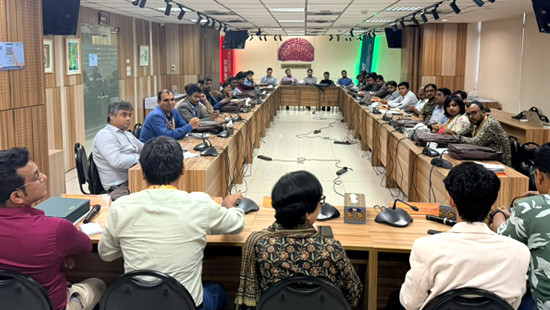
The question fell into a room filled with journalists who had spent 20, 30, even 40 years reporting from Barisal. Several hands went up.
One journalist said that going into detail and reporting in depth is investigative journalism. Another offered a different view, saying that when a journalist suspects corruption and decides to dig deeper, that becomes investigative reporting. From another corner of the room, another journalist added that investigative reporting involves speaking to government officials and people connected to an incident.
Each answer captured part of the practice. But the trainer was looking for something beyond these individual definitions.
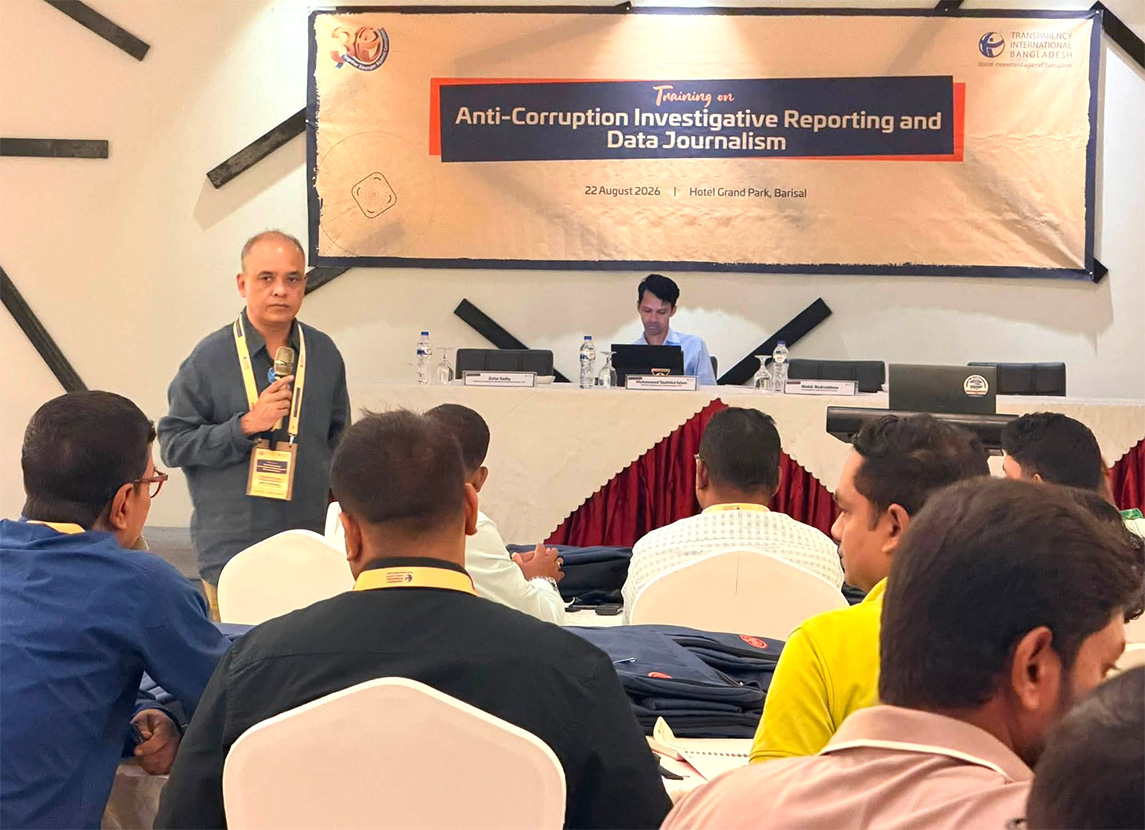
Mohd Bodruddoza Babu, a journalist with more than two decades of experience in investigative reporting, listened quietly. Then he began to unpack what makes an investigation different from ordinary reporting.
An investigative story, he explained, needs originality and a willingness to pursue an issue to its roots. It must uncover what is hidden, verify its sources and build its findings through research and evidence. Above all, it must serve the public interest.
The room became increasingly engaged as the discussion moved beyond definitions and into the craft itself: how to identify an anomaly, how to follow a lead, how to verify information and how to turn evidence into a story.
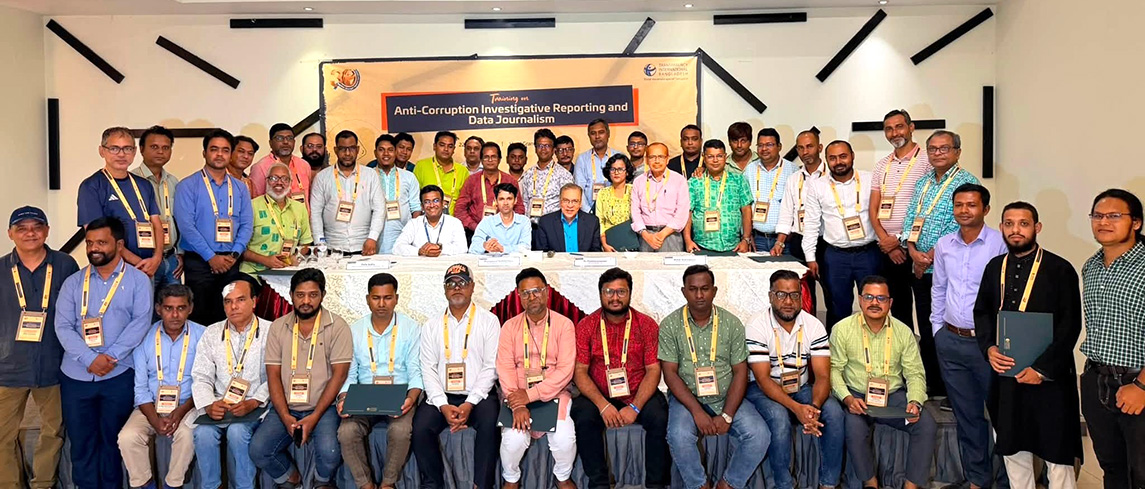
That conversation set the tone for a day-long practical training for 41 journalists from print, electronic and online media outlets in Barisal, held at Hotel Grand Park on 22 August. Organised by Transparency International Bangladesh (TIB), the training, titled “Anti-Corruption Investigative Reporting & Data Journalism,” brought together three areas increasingly important to modern reporting: investigative journalism, data journalism and the use of artificial intelligence for data selection and analysis.
From reporting what is visible to finding what is hidden
Local journalists are often the first to see how corruption and irregularities affect people's everyday lives. They work close to communities and local institutions, witnessing problems in public service delivery that may never reach the attention of national media. But seeing a problem is not always enough to turn it into a strong investigation.
The training therefore focused on practical skills that could help journalists move from observation to evidence - from identifying an irregularity to establishing what happened, who was responsible and why it matters to the public. The sessions were deliberately interactive. Rather than simply listening to lectures, journalists were presented with examples, questioned about their existing reporting practices and encouraged to reconsider familiar approaches.
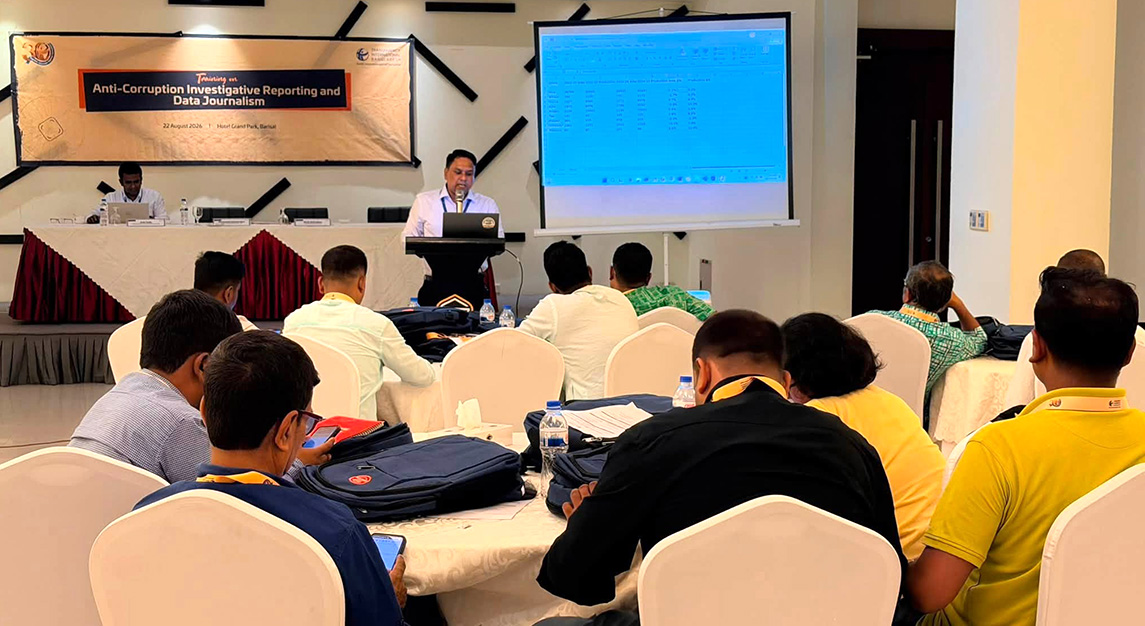
Veteran journalist Mohd. Badruddoza Babu’s investigative journalism session focused on the tools and techniques of investigation, source credibility and safety, evidence gathering and the process of developing an investigation into a report. His presentation of his own investigative television reports gave participants a practical look at how hidden irregularities can be identified and documented.
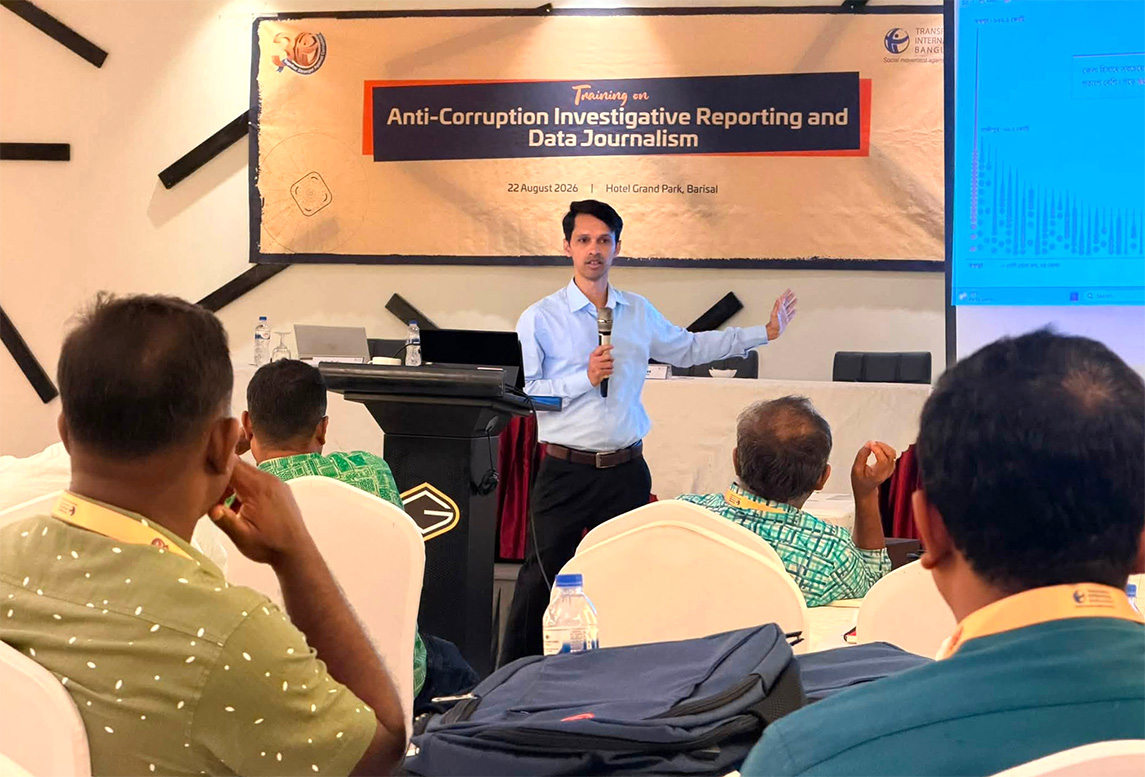
The second session turned to data. Mohammad Tauhidul Islam, Director of Outreach and Communication at TIB and a business journalist with more than two decades of reporting experience, demonstrated how data can become evidence - and how evidence can make a story stronger and more compelling. The session developed into an active exchange, with journalists repeatedly raising questions about how data could be incorporated into their own reporting.
In the final session, K.M. Rafiqul Alam introduced the more technical side of the programme: using artificial intelligence for data extraction, selection and visualisation. The subject was technical, but the journalists' curiosity did not diminish. They actively questioned the trainer and explored how these tools could potentially assist their reporting.
Together, the sessions sought to equip local journalists with practical methods to produce more rigorous, evidence-based reporting on corruption and local governance.
The challenges behind the bylines
But as the training drew towards its conclusion, the journalists began talking about something beyond reporting techniques.
They started talking about themselves.
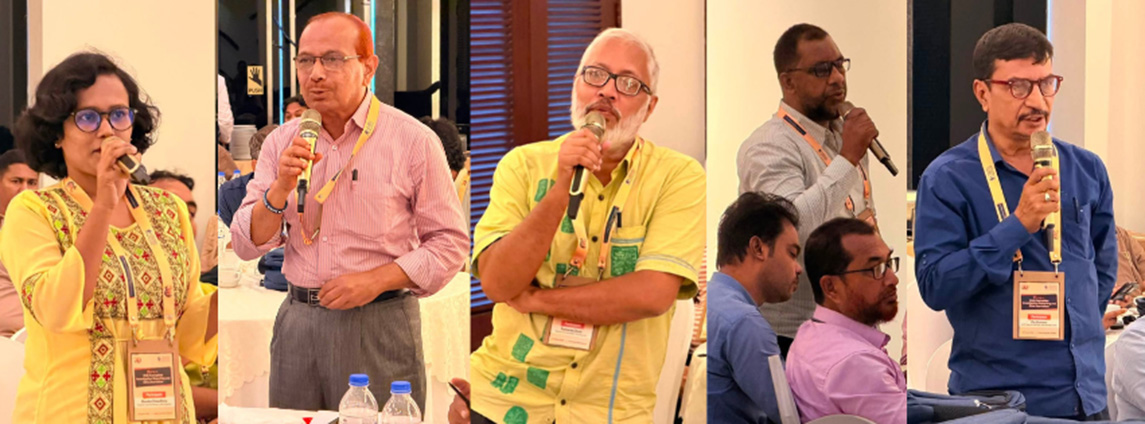
For local journalists, professional development is often accompanied by professional insecurity. Participants raised concerns about safety, financial vulnerability and other challenges that affect their ability to work independently and sustainably.
For Monika Chowdhury, a reporter for Daily Jugantor, the training also highlighted another reality: she was the only woman among the 41 participants. She welcomed the opportunity to learn how investigative reports are actually developed and said the training had changed the way she viewed investigative journalism. At the same time, her presence as the sole female participant reflected the continuing gender gap within local journalism.
Another participant, Zia Shaheen, staff reporter of Daily Manab Zamin, took the discussion further.
Addressing TIB Executive Director Dr. Iftekharuzzaman after the training, Shaheen called for greater attention to the financial realities of regional journalists. He questioned how much journalists working for national newspapers actually receive, whether they receive regular salaries at all, and whether the reality outside Dhaka matches the official picture of the media sector.
His appeal was direct: if TIB investigates corruption in government and public institutions, could it also look into the irregularities within the journalism industry itself?
For the journalists in the room, this was not an abstract concern. It was about the conditions under which they were expected to do their work.
Supporting Journalists on the Ground
Dr. Iftekharuzzaman listened to the concerns raised during the closing session, particularly about the difficult conditions facing grassroots journalists, including inadequate salaries and limited institutional support.
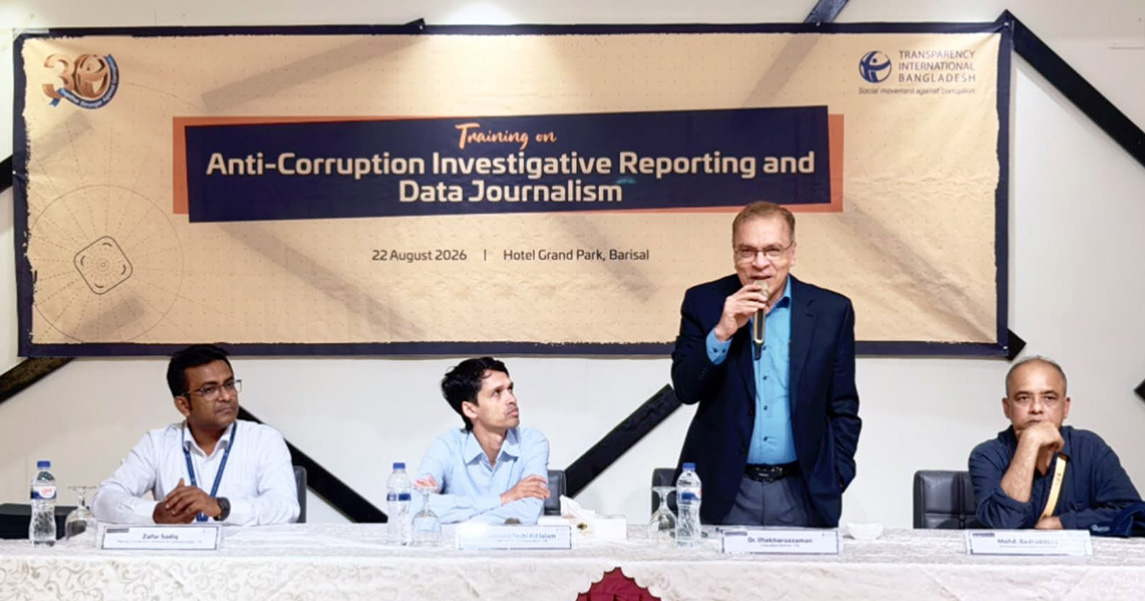
He acknowledged that TIB cannot compel media organisations to change their practices, but said the organisation can raise these concerns, advocate for reforms and communicate them to relevant authorities and media stakeholders. He also highlighted TIB’s initiatives supporting journalists outside Dhaka, including its annual awards programme, which gives priority to reporters working outside the capital, fellowship opportunities and regional training programmes. He encouraged the participants to remain connected with TIB and put the skills gained through the training into practice.
He also stressed that the challenges facing journalists cannot be separated from the broader political, constitutional and institutional environment in which the media operates. Expressing disappointment over the limited progress in implementing the Media Reform Commission’s recommendations, he said meaningful media reform should be part of the broader reform process that followed the July uprising.
He further encouraged greater participation of women in future training programmes, noting the lack of gender diversity among the participants.
The training beyond the training
By the time certificates were handed to the participants, the day's discussion had moved well beyond the technical question with which it began. The journalists had come to learn how to investigate corruption, work with data and use new technological tools.
But they also raised a question closer to home: who examines the conditions in which journalists themselves are expected to work?
That question may be just as important to the future of investigative journalism. A journalist needs more than the ability to find a story. They need the skills to verify it, the evidence to substantiate it and an environment that allows them to pursue it responsibly and independently. For the 41 journalists in Barisal, the training offered tools for the first two. The conversations that followed pointed to the wider conditions needed for the third.
And that is ultimately where the value of such training lies - not simply in teaching journalists how to report, but in strengthening their ability to ask harder questions, follow evidence and bring issues that affect their communities into the public eye.