Published: 29 July 2026
When a public hospital's newly installed 20 crore BDT MRI machine sits dark and silent in a locked room while desperate patients are turned away at the gates, where does the real story lie? Is it in the frustration of a family spending their life savings at a private clinic next door? Or is it locked away inside a dusty file cabinet, hidden within a shipping manifest that quietly recorded a cheap, refurbished unit delivered in place of the contracted German model?
What happens when a 176 crore BDT public housing project receives exactly one bid, and nobody asks why? How do billions in public funds disappear into river embankment projects along the Kushiyara River even as nearby villages continue to sink into the monsoon floods year after year?
These are not isolated disasters. They are what systemic corruption looks like when nobody is watching closely enough. Every reporter in Bangladesh knows this wall. The human cost is visible on the ground, but the moment they try to trace who is responsible, they meet denials, delay, and the quiet threat of a lawsuit. Official statements and press releases cannot get a reporter past that wall. What can be done is technical precision, an unassailable paper trail, and the ability to read public data closely.
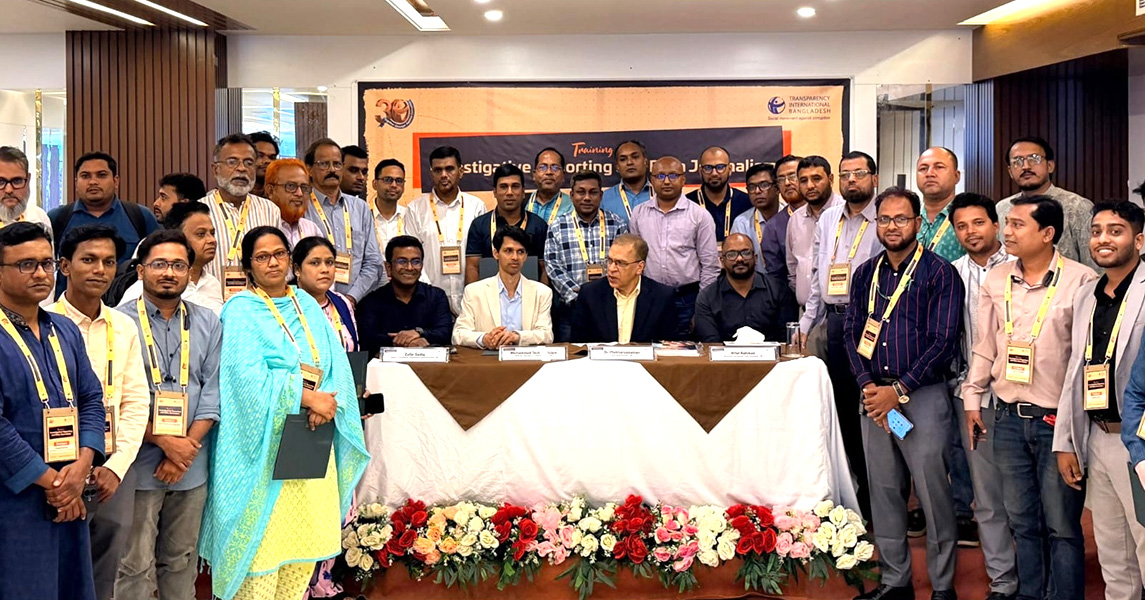
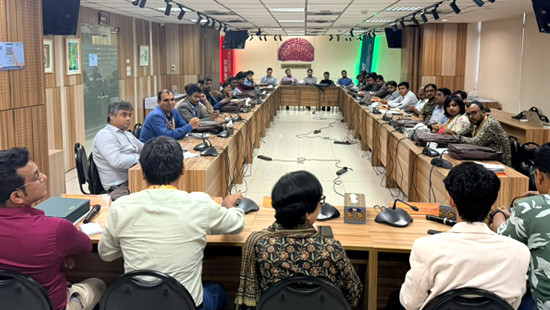
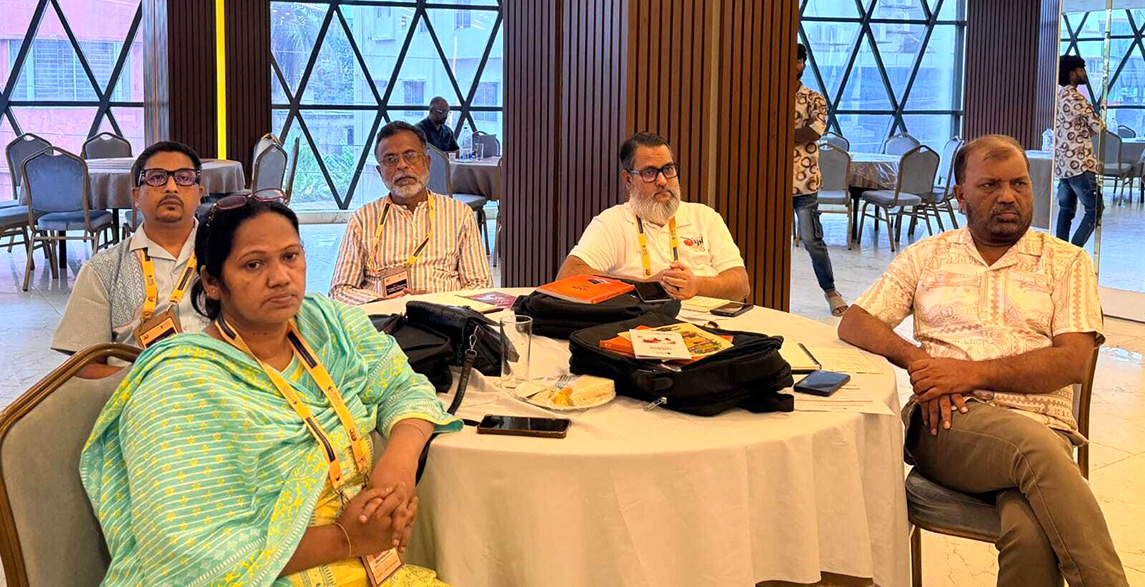
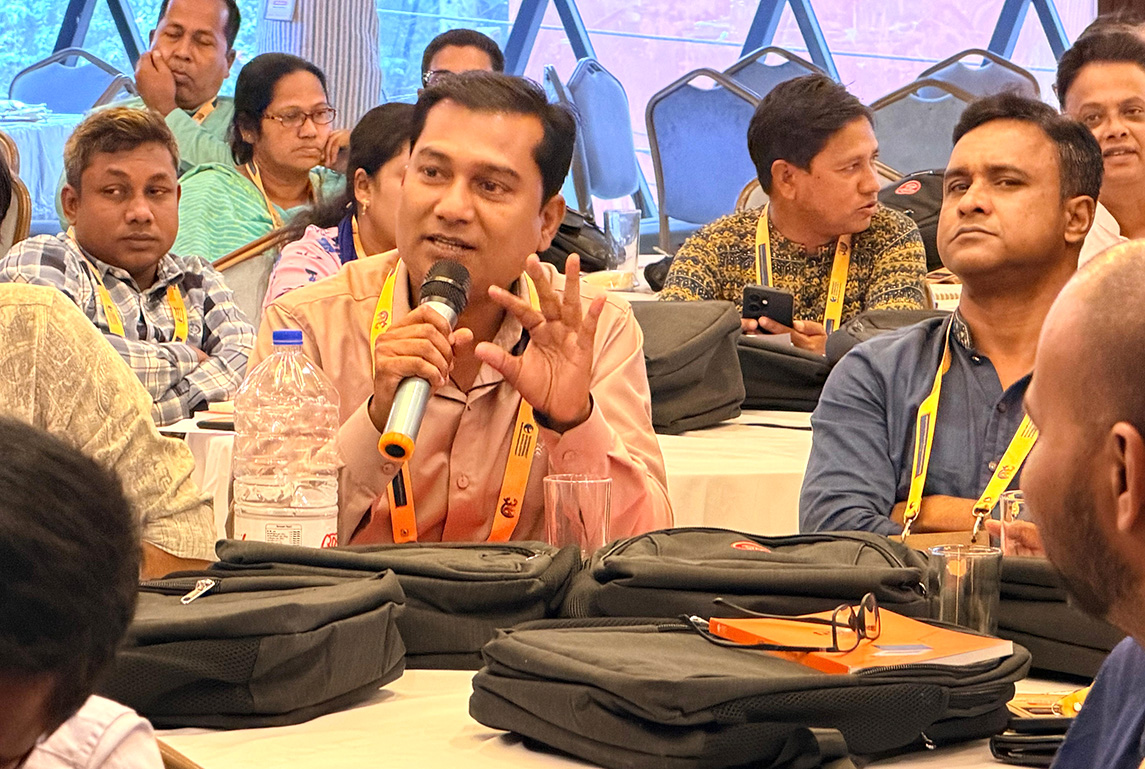
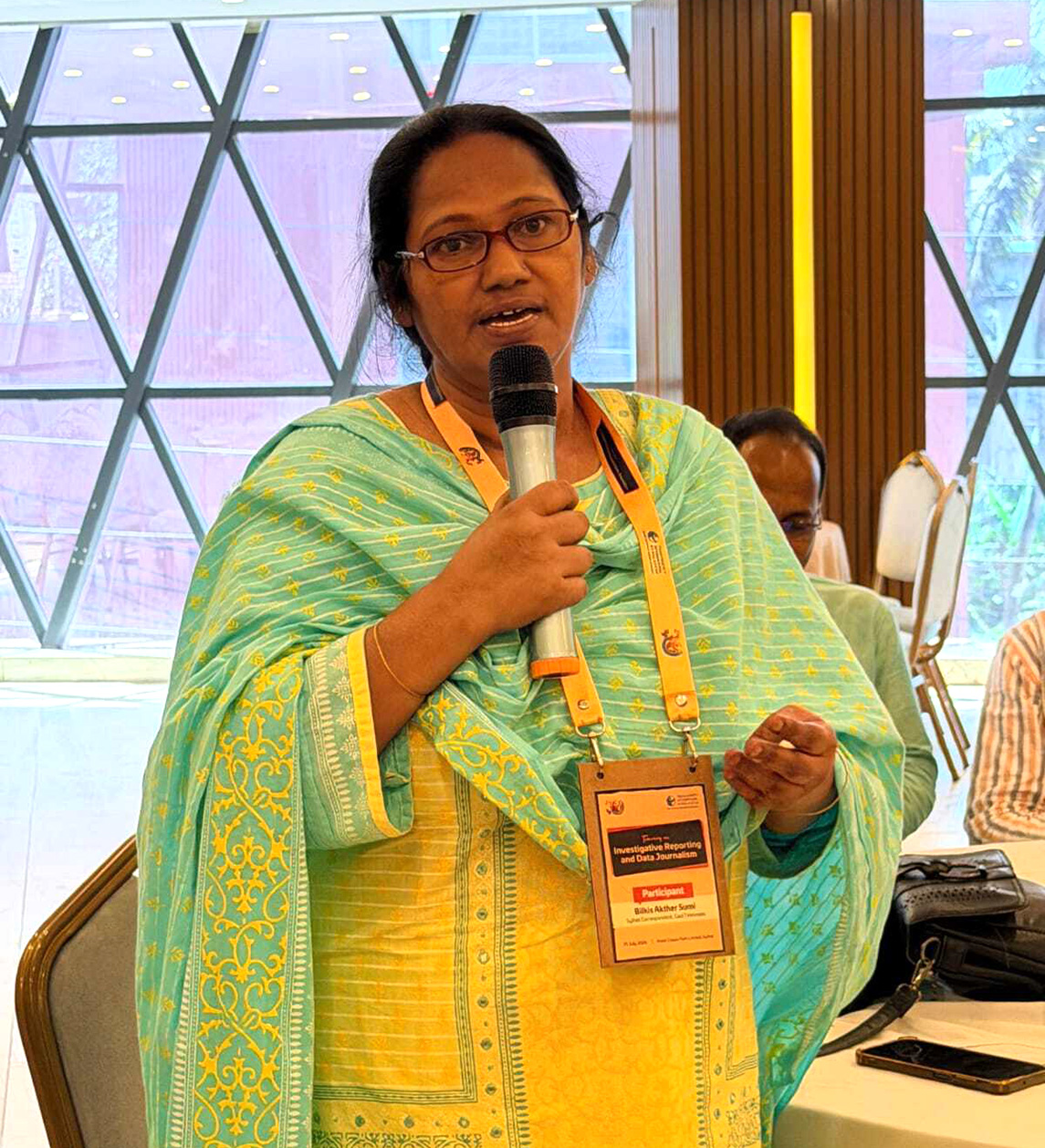
Forty-one regional journalists have attended an investigative and data training in Sylhet to learn how to overcome those obstacles. Transparency International Bangladesh (TIB) organized this one-day training at Hotel Crown Park. The room fell unusually quiet when the first question was asked to the participants about public tenders by presenting a national audit of public procurement portals. TIB's Outreach and Communication Director Mohammad Tauhidul Islam told participants that over 84,000 crore BDT in public tenders across Bangladesh had been quietly funneled through single-bidder arrangements over sixteen years. The room did the math in silence.
The journalists had their version of that number. As they talked through their reporting experiences, a local pattern surfaced. In the Sylhet Division, officials discovered a clever way to avoid single bidding by breaking down large infrastructure projects into smaller parts, each under 5 crore BDT, and using the limited tendering method (LTM). Rules written for specialized equipment procurement had quietly become a tool for turning ordinary road contracts into political lotteries. The session proved that evidence of corruption does not always hide in backrooms. It sits on open government portals, waiting for a trained eye to gather and study it.
But finding the anomaly on a screen, Mohammad Tauhidul Islam reminded them, is the easy part. What comes next is harder. Turning a suspicious number into a story that survives the institution's denial takes evidence nobody can argue with.

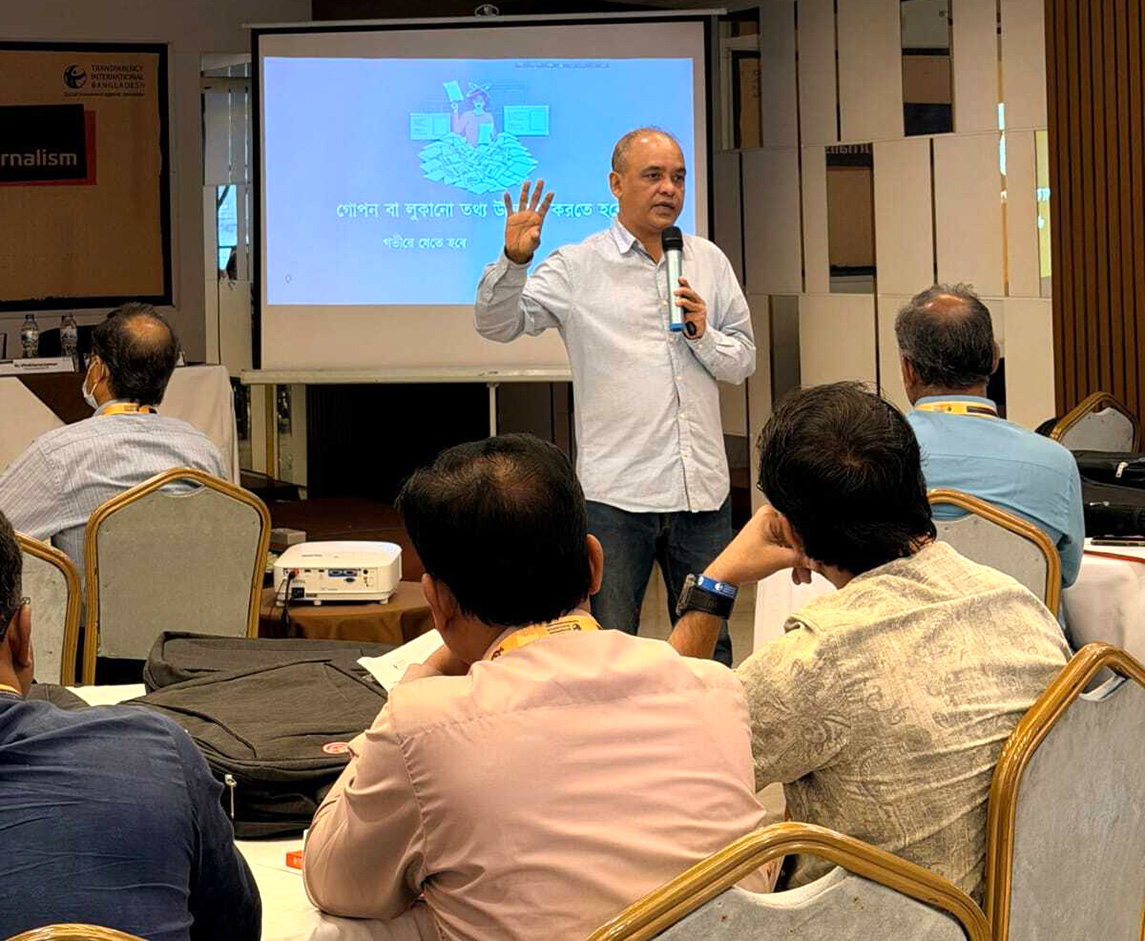
Veteran investigative reporter Mohd. Badruddoza knows exactly how hard that is and how possible it is. He walked participants through his investigation into a massive 425 crore BDT university land procurement fraud, built not on a leak but on legwork, systematically connecting local sub-registry deeds in Rupganj, conducting door-to-door price audits with neighboring landowners, and tracking rapid bank transfer trails. When the university tried to make the story disappear behind a press conference, Mohd. Badruddoza's team was ready. The investigation led to the jailing of seven corrupt actors after they issued ten precise questions that officials could not answer.
The method he shared with the room that day has a name, the 5P framework: Purpose, Process, People, Paper, and Proof. Mohd. Badruddoza describes an investigator the way a surgeon might describe their own work, carefully removing a tumor without severing surrounding nerves, remaining ethically strong, and always searching for context like the “axe” in a crime scene so innocent lives are never harmed. This discipline is designed to connect a human story to a paper ID and to ensure that neither is overlooked.
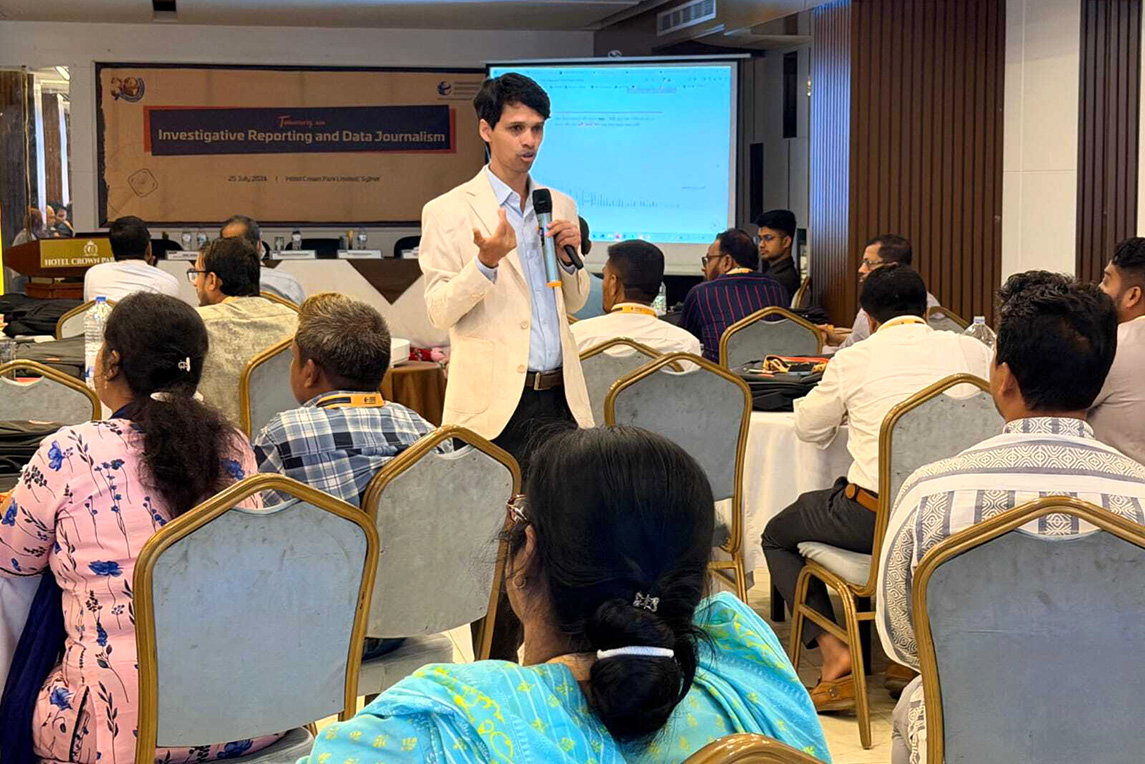
Even the best method runs into a practical problem is ‘Time’. A reporter chasing the next day's deadline rarely has the hours to sift through thousands of pages of municipal budgets, procurement histories, and compliance logs.
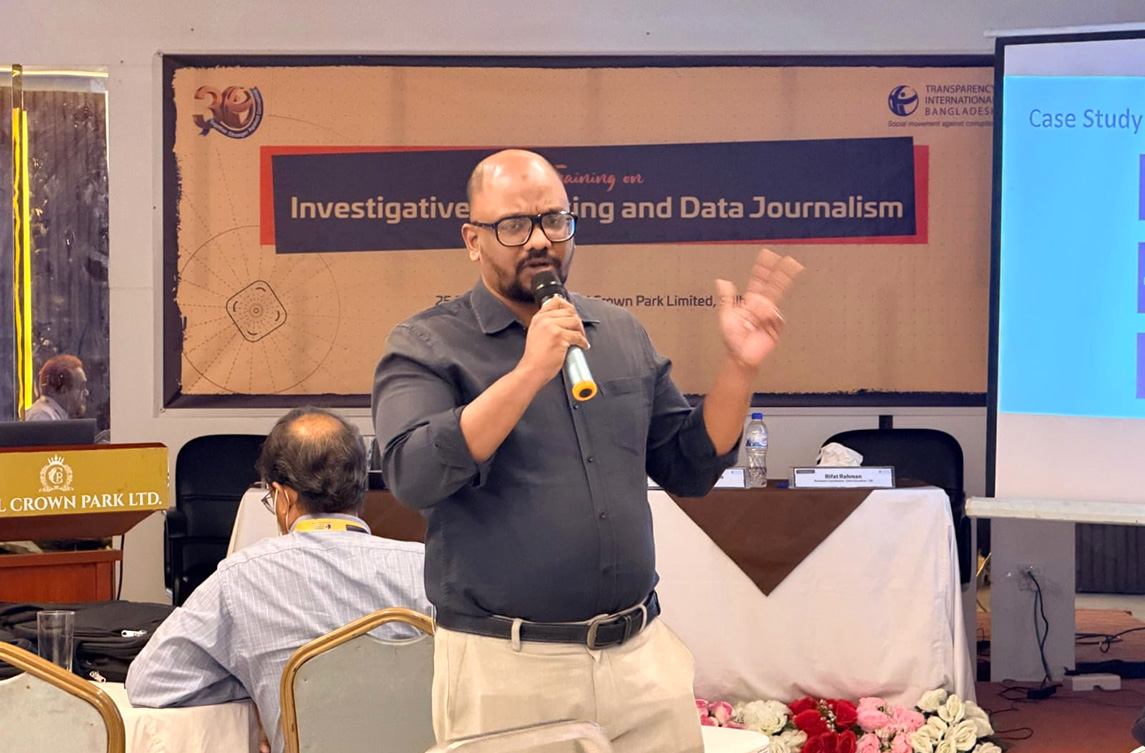
That question found its answer when TIB’s Assistant Coordinator (Data Visualization) Rifat Rahman took the floor. During the live demonstration, he fed years of unstructured regional records into an AI analysis tool, allowing the audience to witness the transformation of extensive paperwork into seconds. The software scraped 15 years of government procurement records to reveal that 3,000 crore BDT had been spent across 106 river management projects on the Kushiyara River alone, while simultaneously cross-referencing local flood intensity metrics and real-time power plant performance logs. For journalists who had only ever considered technology to be a distant idea, this was the moment it turned into a tool they could use the next morning. Rifat Rahman was careful about one thing. The software could sort the paperwork, but it could not decide what mattered or what was true. That decision was still theirs to make.
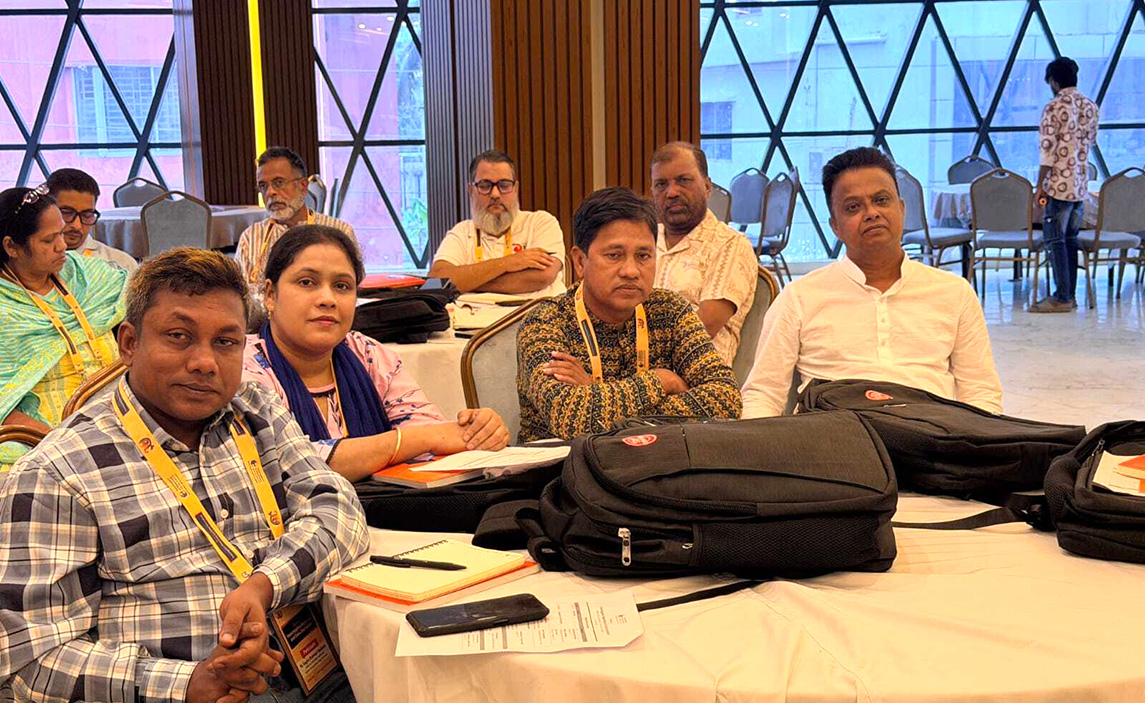
None of this works without discipline, though. A story built on open data and rigorous evidence becomes its own protection, a shield against legal threats that also safeguards the public funds it is written to defend. Each journalist took home TIB's Bengali Data Journalism handbook, the first comprehensive guide of its kind in the country, along with the digital resources to put it to use.
That is what the day had given the room- in Mohammad Tauhidul Islam's audit, in Mohd. Badruddoza's 5P framework, and in the tool Rifat Rahman put in their hands. TIB's Executive Director Dr. Iftekharuzzaman named it directly, “Investigative journalism is not merely about reporting facts; it is about defending the public interest against systemic abuse. By mastering open data and modern investigative techniques, journalists transform themselves from passive observers into active custodians of democratic accountability and institutional integrity.”
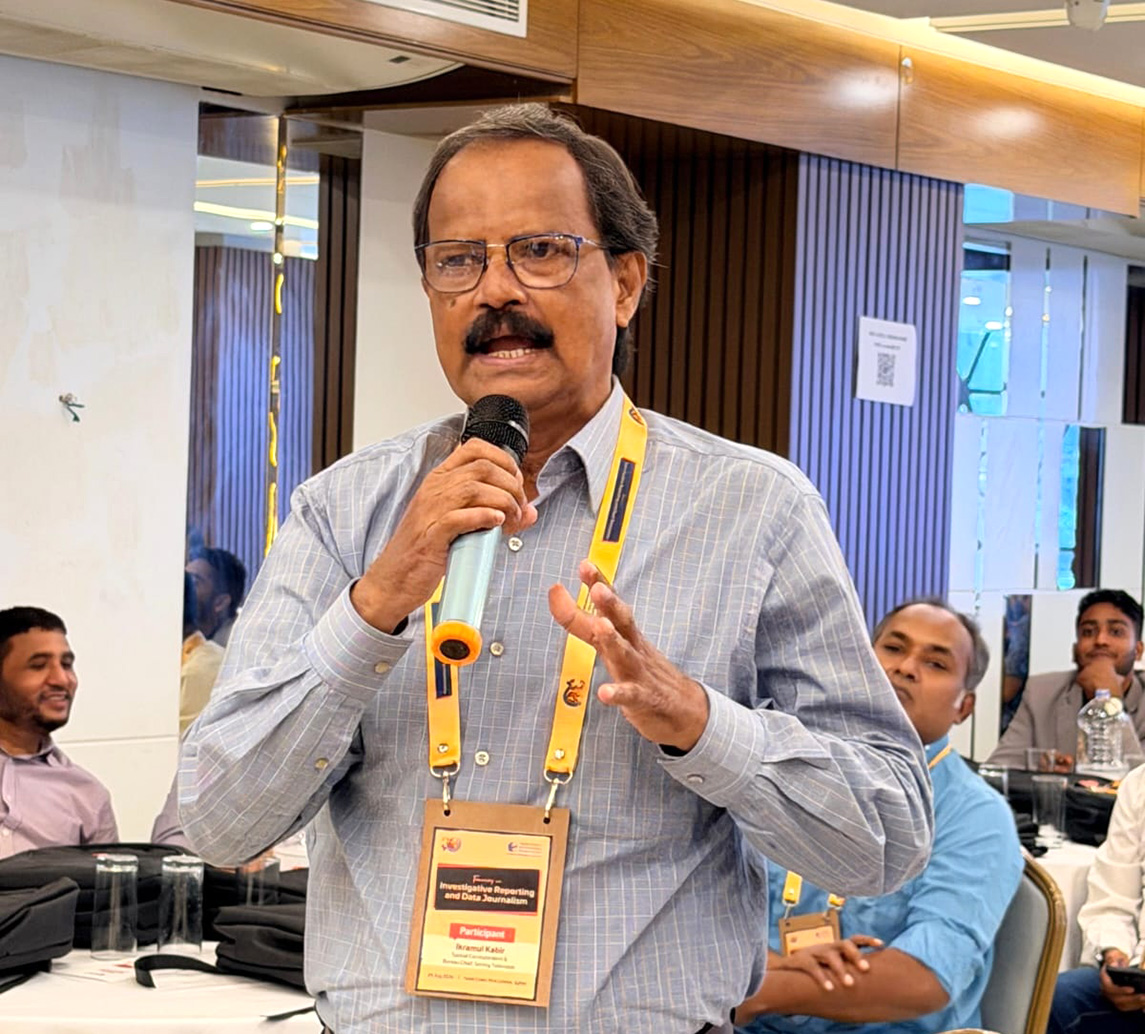
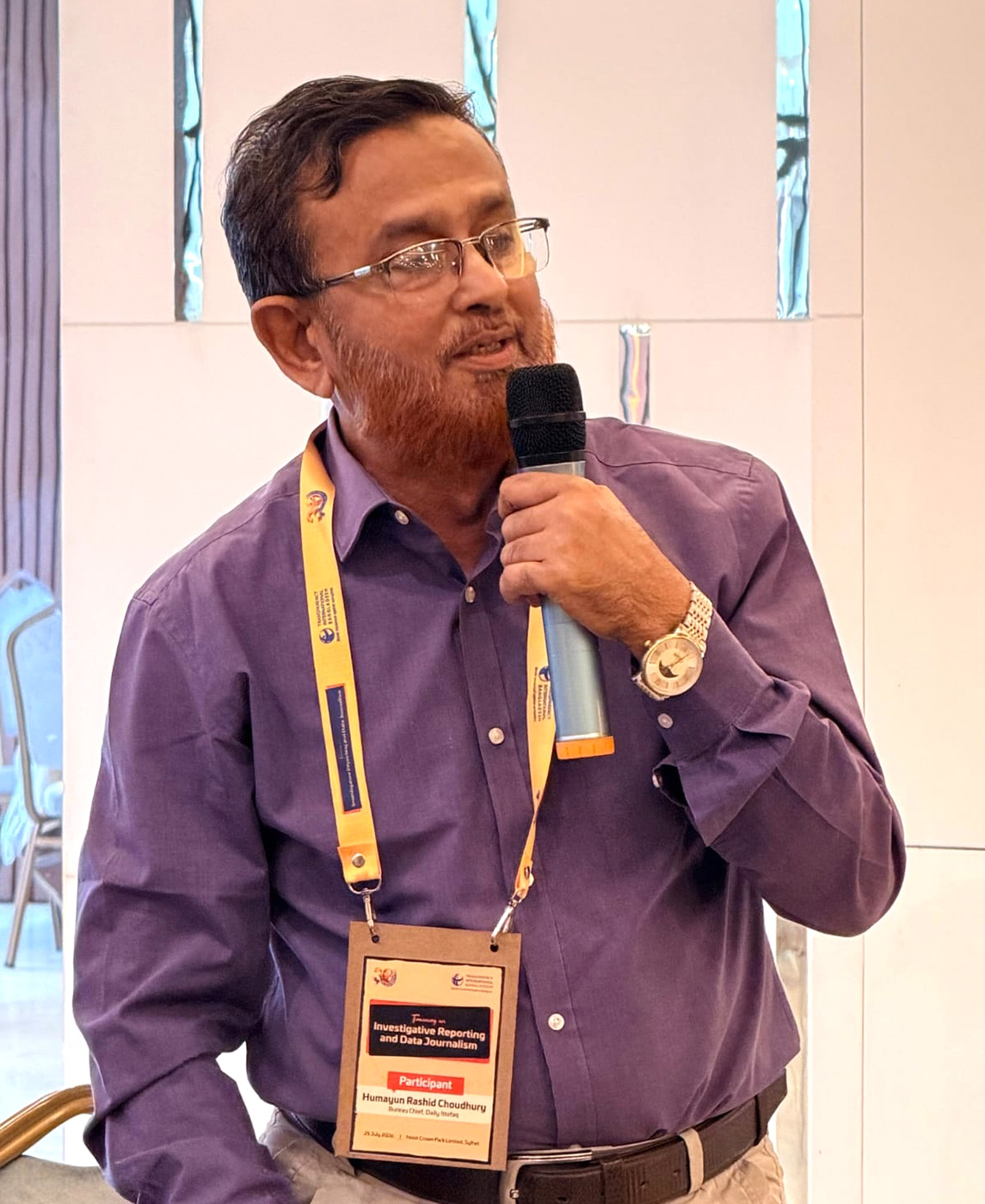
The mastery of data, methods, and the stories hidden behind routine files is what forty-one journalists took away from Sylhet. Which is why the story comes back to where it began. The locked room with the silent MRI machine. The embankments are swallowing billions of dollars, yet villages continue to flood. Opening that locked room, and tracing where the missing billions went, takes the same discipline, turning an obscure number into a fact nobody can deny.
A locked file cabinet will not stop them now. A denial at a press conference will not stop them either. They are ready to decode the spreadsheets, follow the paper trails, and hold power accountable across Bangladesh.