Press Release
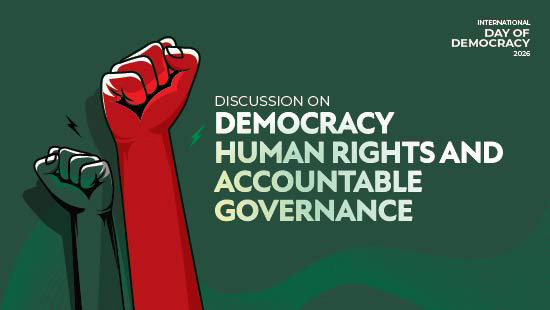
Dhaka, 15 September 2024: The emergence of political power that upholds the spirit of the anti-discrimination movement is essential for building ‘New Bangladesh’ as expected by the people. Fundamental reforms in the electoral system, administrative framework, and judiciary; ensuring freedom of the media and expression; and safeguarding the basic rights of all people, irrespective of religion and caste, will make ‘state reform’ possible. This statement was made by the speakers at the discussion held on the occasion of International Democracy Day-2024, titled ‘Democracy and Good Governance in New Bangladesh: Expectations of the Youth’. In addition, the discussants commented that the people of this country need to decide whether a new political framework is necessary for the fundamental change of the existing state framework.
The discussion was held at TIB's office in Dhanmondi, with Dr. Iftekharuzzaman, Executive Director of TIB, moderating. The main speakers included Hasnat Abdullah and Arif Sohel, Coordinators of the Anti-Discrimination Student Movement; Samantha Sharmin, Spokesperson; Ariful Islam Adib, Member of the National Citizens' Committee. Discussants included Farabi Hafiz, Presenter and Journalist; Sadat Hossain, Young Fiction Writer; Shimu Naser, Media Professional and Humor Writer. In addition, members of the Youth Engagement and Support (YES) group formed under TIB's inspiration from various educational institutions in Dhaka, media professionals, and young professionals from various fields participated in the open discussion.
Dr. Iftekharuzzaman, Executive Director of TIB, referring to the continuing political rivalry, extortion, land grabbing, and the rise of undemocratic, communal, intolerant forces that contradict the core values of the anti-discrimination movement, said, "The rise of political power rooted in the spirit of the anti-discrimination movement is essential to achieving the goals of the ‘New Bangladesh.’ The leadership will emerge from the mainstream of the movement, and I believe all students and citizens participating in the movement will actively and spontaneously support this."
Hasnat Abdullah, Coordinator of the Anti-Discrimination Student Movement, said, "People do not trust those who come to power because their past experiences have been unpleasant. They view us with suspicion as well. The people are right to do so. Even those who came to power through movements are being questioned about whether they will act the same way. Under the previous government, there was a price for asking questions. But now, there is no price for asking questions. No one will get a plot, flat, or any special benefit for questioning us. By asking questions, we will be corrected, and reforms will be accelerated. The security of those who disagree with our views must be doubly ensured. You can put your trust in us."
Arif Sohel, Coordinator of the Anti-Discrimination Student Movement, said, "This movement is to ensure equality, dignity, and social justice. Our flag changed in 1947 and 1971, but true independence was never achieved because all subsequent rulers maintained elements of authoritarianism. The people of this country have always fought against the false narratives of the rulers, but their voices were never allowed in power. We believe that the 2024 movement has created a language of protest for the people, which was not possible in 2018. We were able to speak the people's language and remove the autocratic regime."
Samantha Sharmin, Spokesperson of the National Citizens' Committee, said, "The New Bangladesh has generated much hope and aspiration among the youth. To build this New Bangladesh, an environment of public discussion must be created. It has always been said that the people are the source of power, but in reality, this has not been reflected. To ensure the participation of all the people of Bangladesh in the state reforms, discussions need to be arranged, especially at the rural level and in rural areas."
Ariful Islam Adib, Member of the National Citizens' Committee, said, "One of the most important responsibilities of the state is to ensure the human dignity of every citizen. Everyone should have the right to live properly and to receive social justice. The constitutional institutions of the state are supposed to ensure the security of the people, but in the past, the state machinery was used as a tool of oppression."
Renowned young author Sadat Hossain said, "Sustainable democracy is required for building the New Bangladesh. Democracy cannot be ensured just by holding elections. Autocratic governments focus on two things: infrastructure development and the destruction of the education system, which neglects intellectual development. The education sector is structured in such a way that the general public loses the ability to question the policies of the state. Therefore, democracy cannot be consolidated without integrating intellectual engagement and common sense."
Journalist and satirist Shimu Naser said, "In New Bangladesh, no one should fear persecution by the government forces for criticizing someone's work. In the last 10-15 years, political cartoons have been eliminated, curbing the freedom of artists. We should be able to criticize without fear. The marginalized groups actively participated in this movement, but we are not hearing what kind of Bangladesh they want. I believe the laws and governance framework of New Bangladesh should be formulated or amended considering everyone's needs."
Presenter and journalist Farabi Hafiz said, "I see despair among the people, yet the bloodstains are still fresh. However, we cannot accept the incidents in Rajshahi. In New Bangladesh, there should be no room for such vengeful actions."
Media Contact:
Mohammad Tauhidul Islam
Director, Outreach and Communication
Mobile: 01713-107868
Email: tauhidul@ti-bangladesh.org